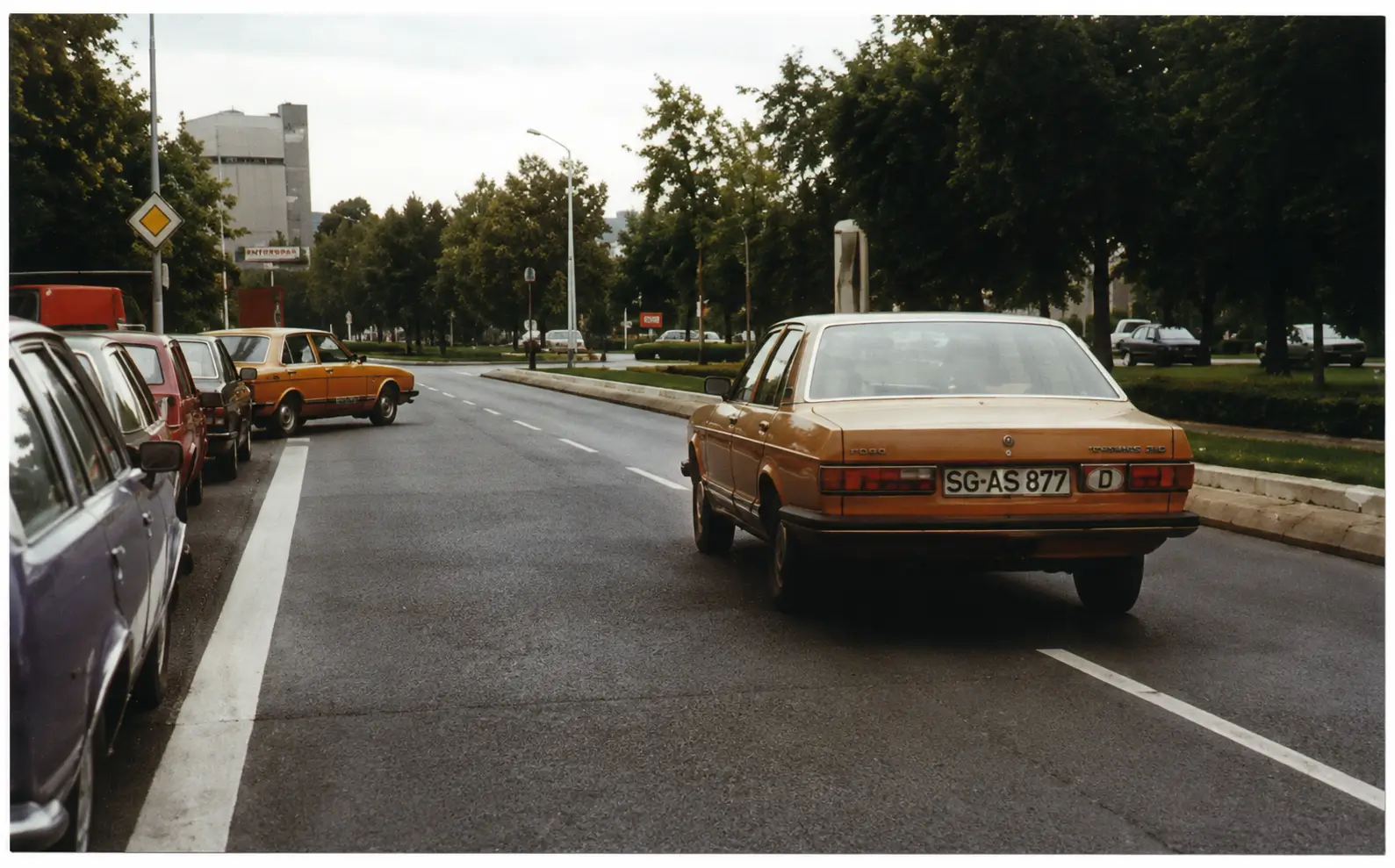
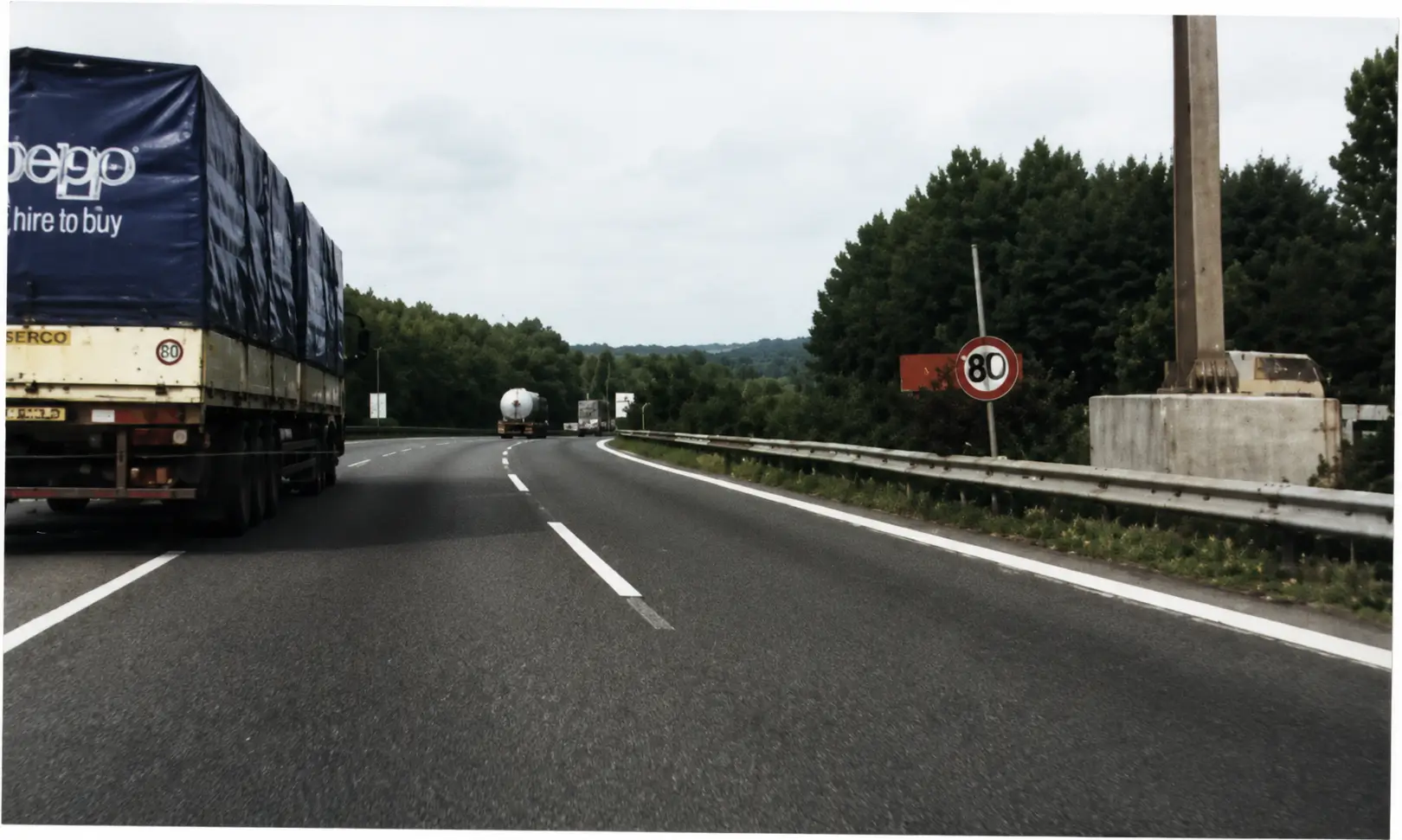
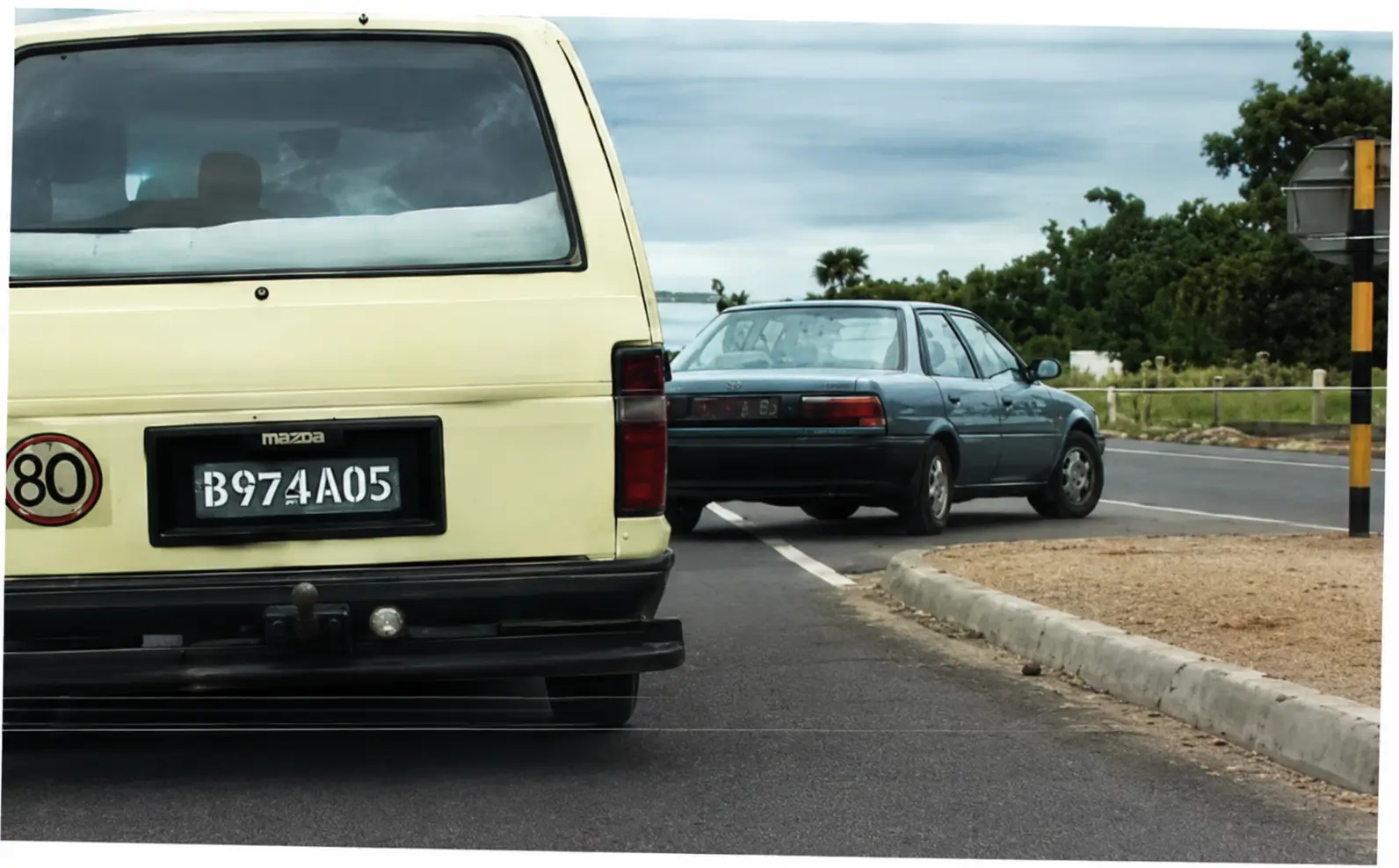
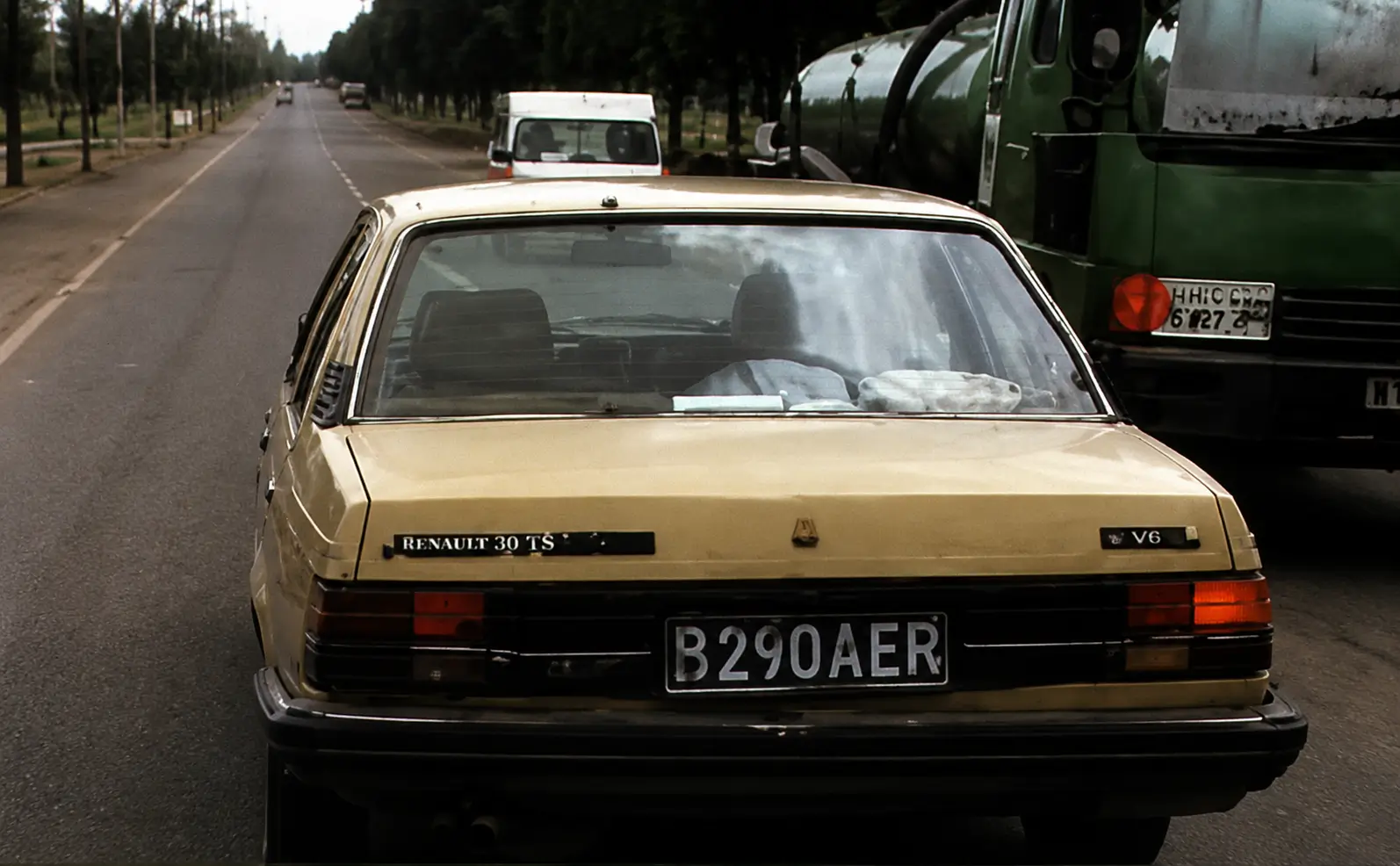
1.You want to pull out of a row of parked vehicles into the stream of moving traffic. Behind you is a parked truck and trailer. How do you assess this situation?
- Because of your restricted view, you cannot see approaching vehicles until they are very close
- Because of their restricted view, vehicles approaching from behind cannot see your vehicle until very late
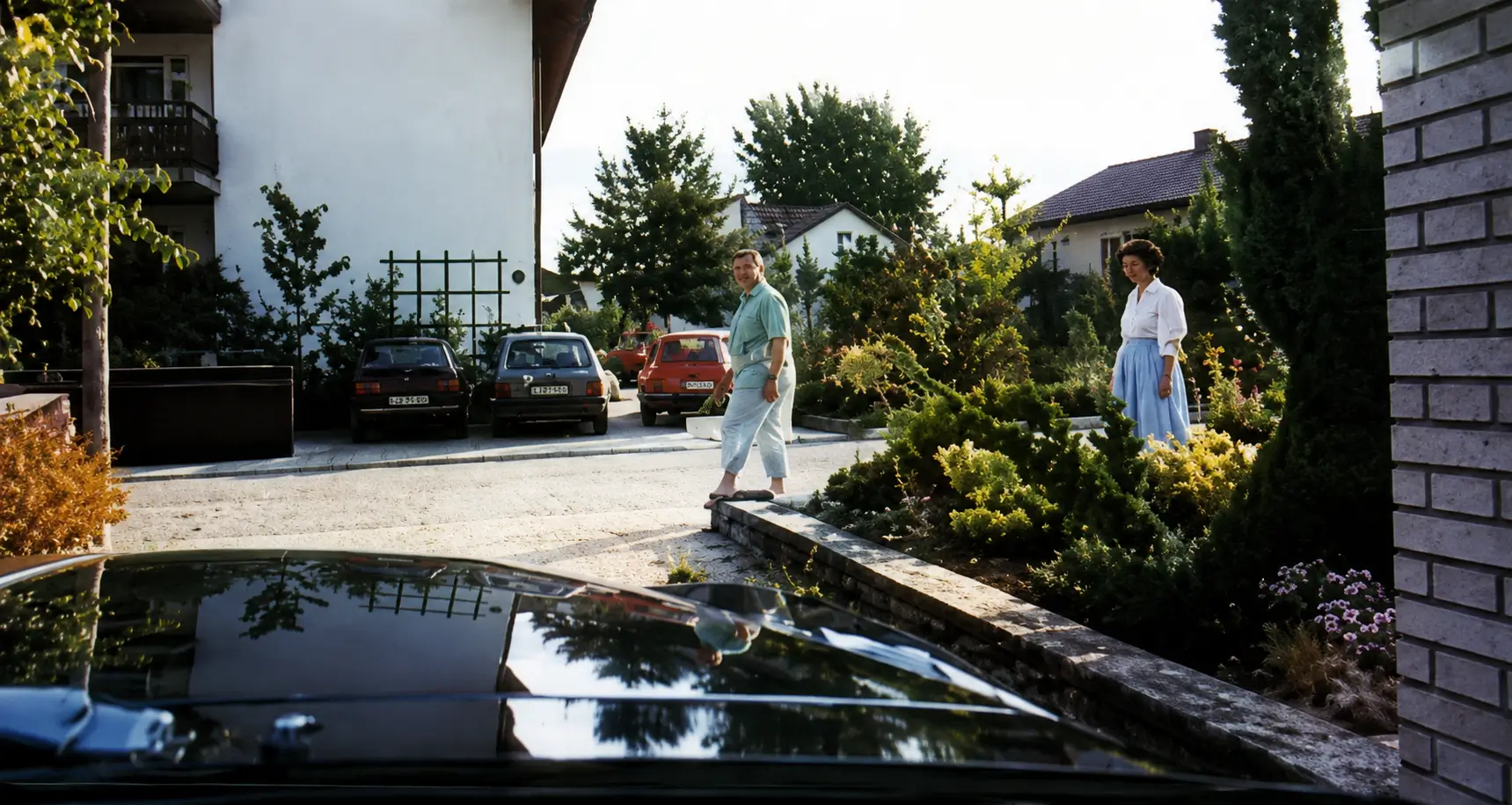
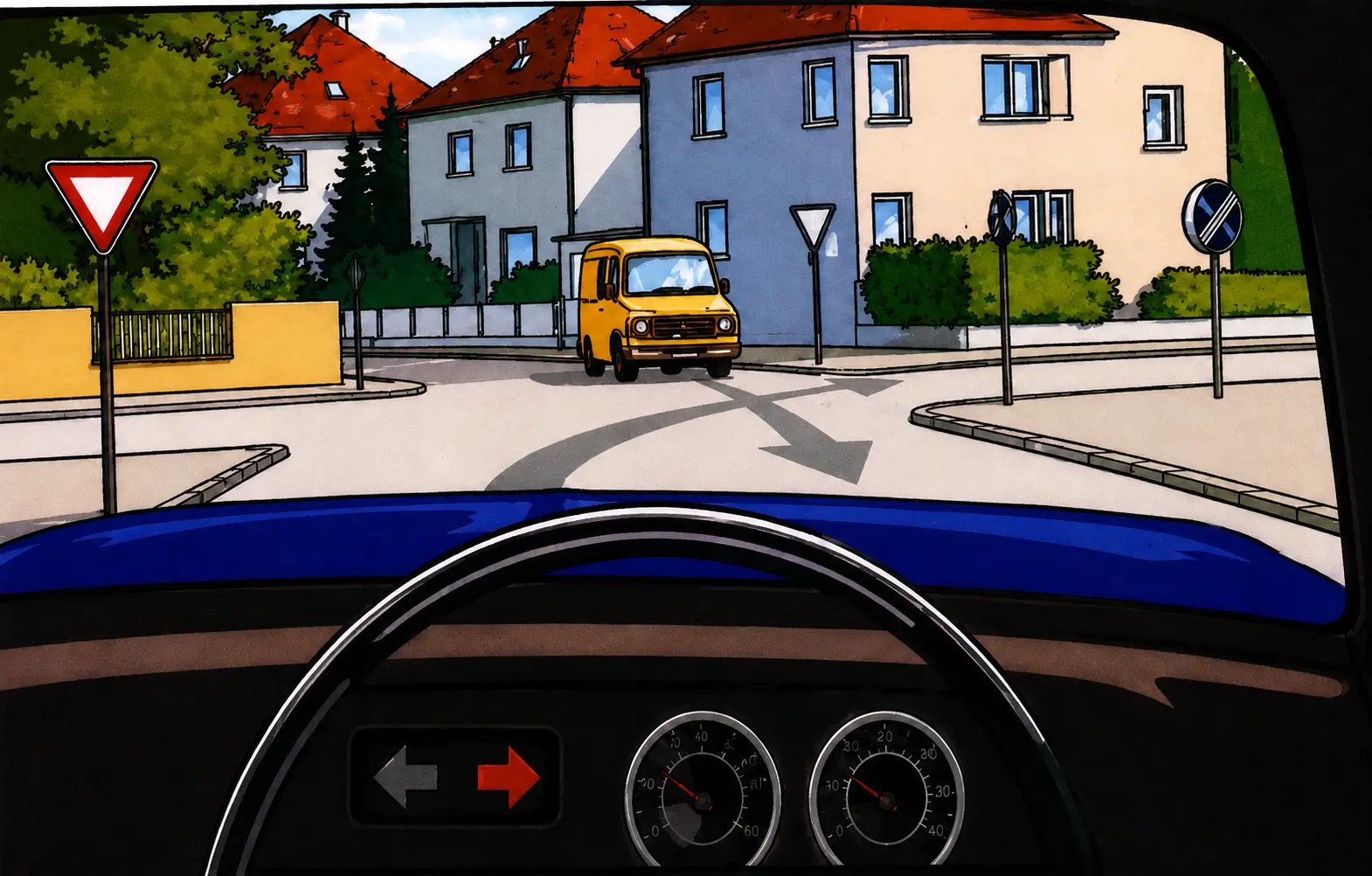
2.You want to pull out of a driveway and turn left onto the road. A cyclist is approaching from the right. Who must wait?
- You must wait
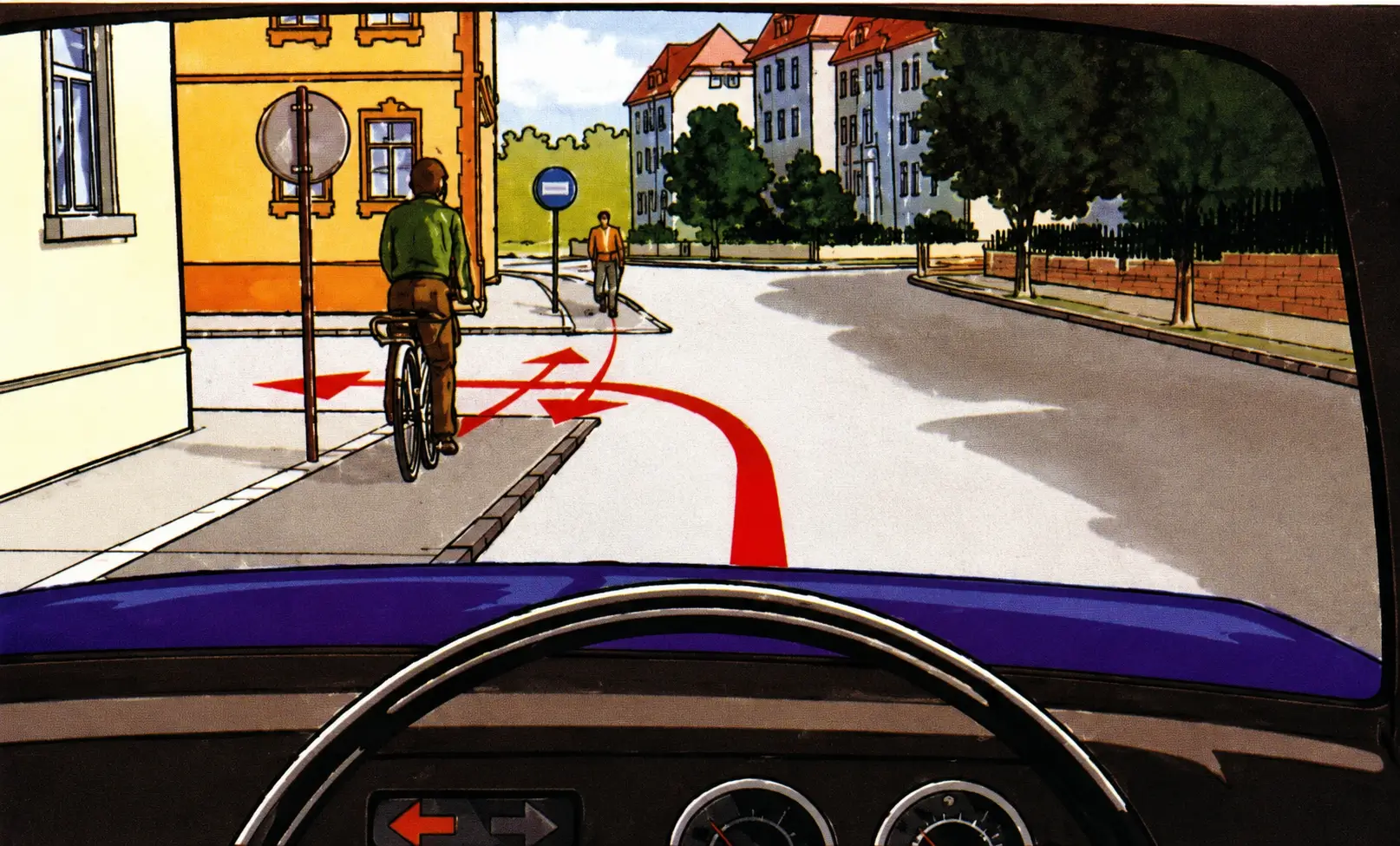
3.You want to pull out of a driveway across the pavement onto the roadway. What must you look out for first?
- Children cycling on the pavement
- Children playing and pedestrians
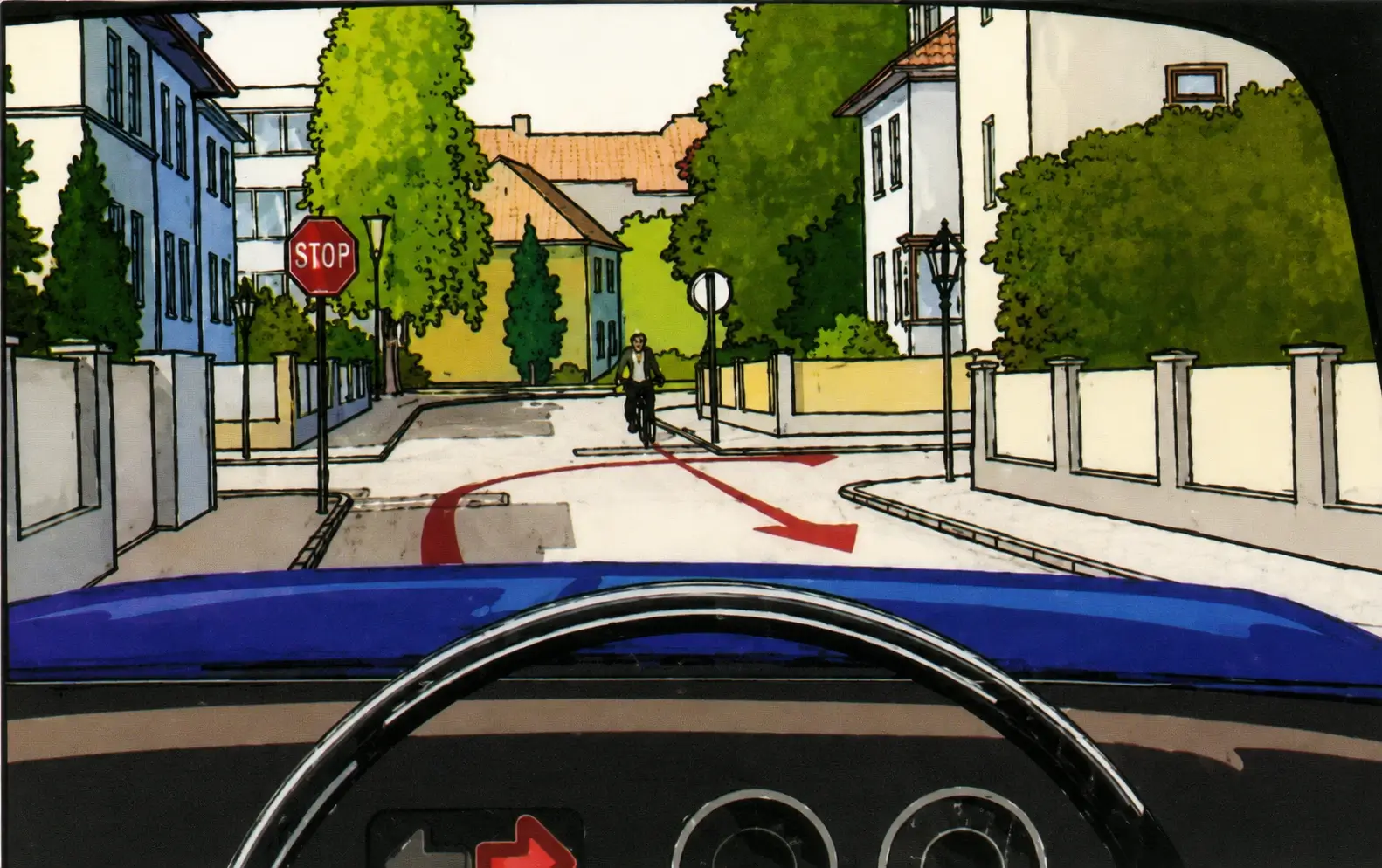
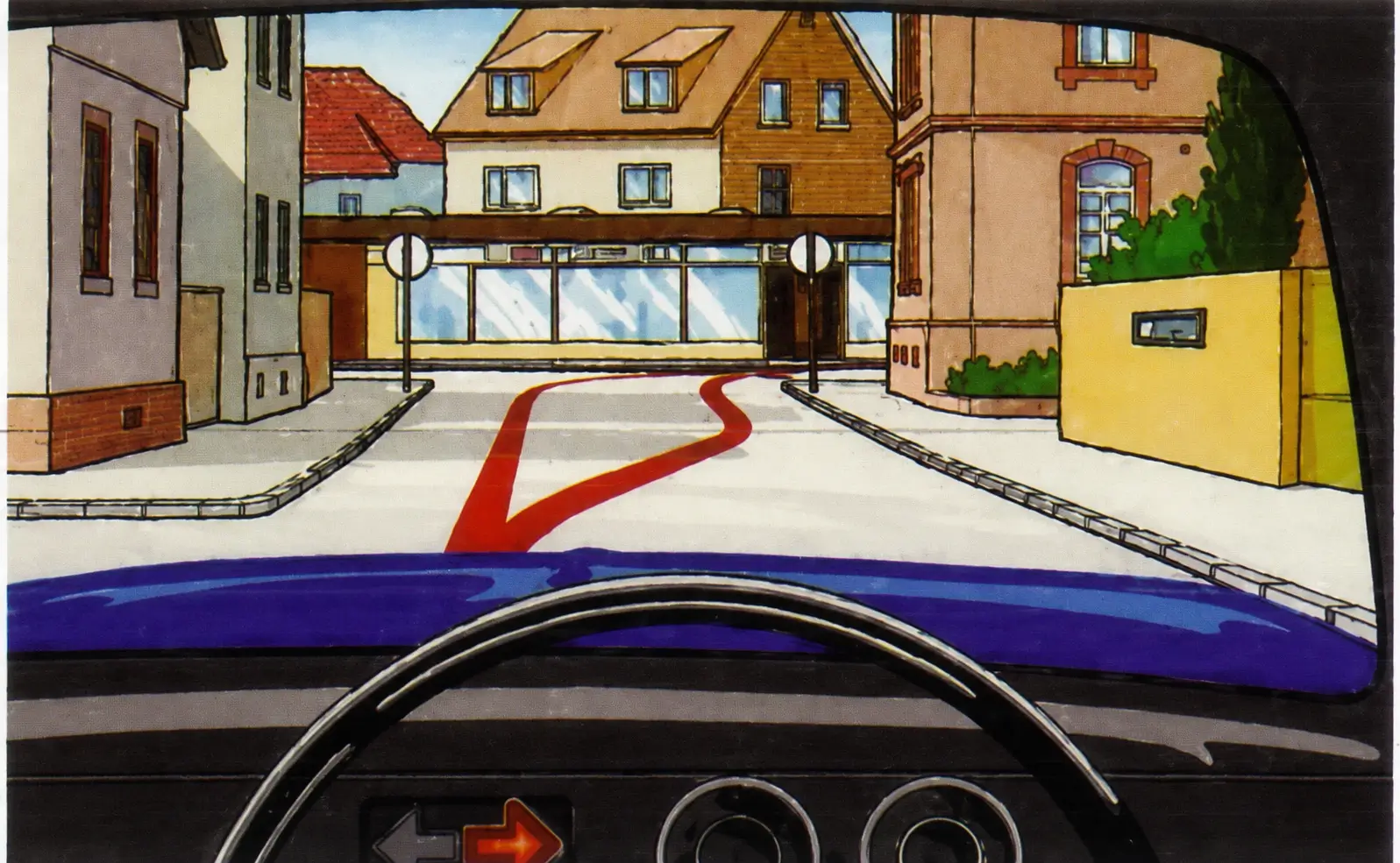
4.You want to pull out onto a road from a traffic calmed area. What must you do?
- Allow pedestrians on the pavement to pass
- Give precedence to vehicles
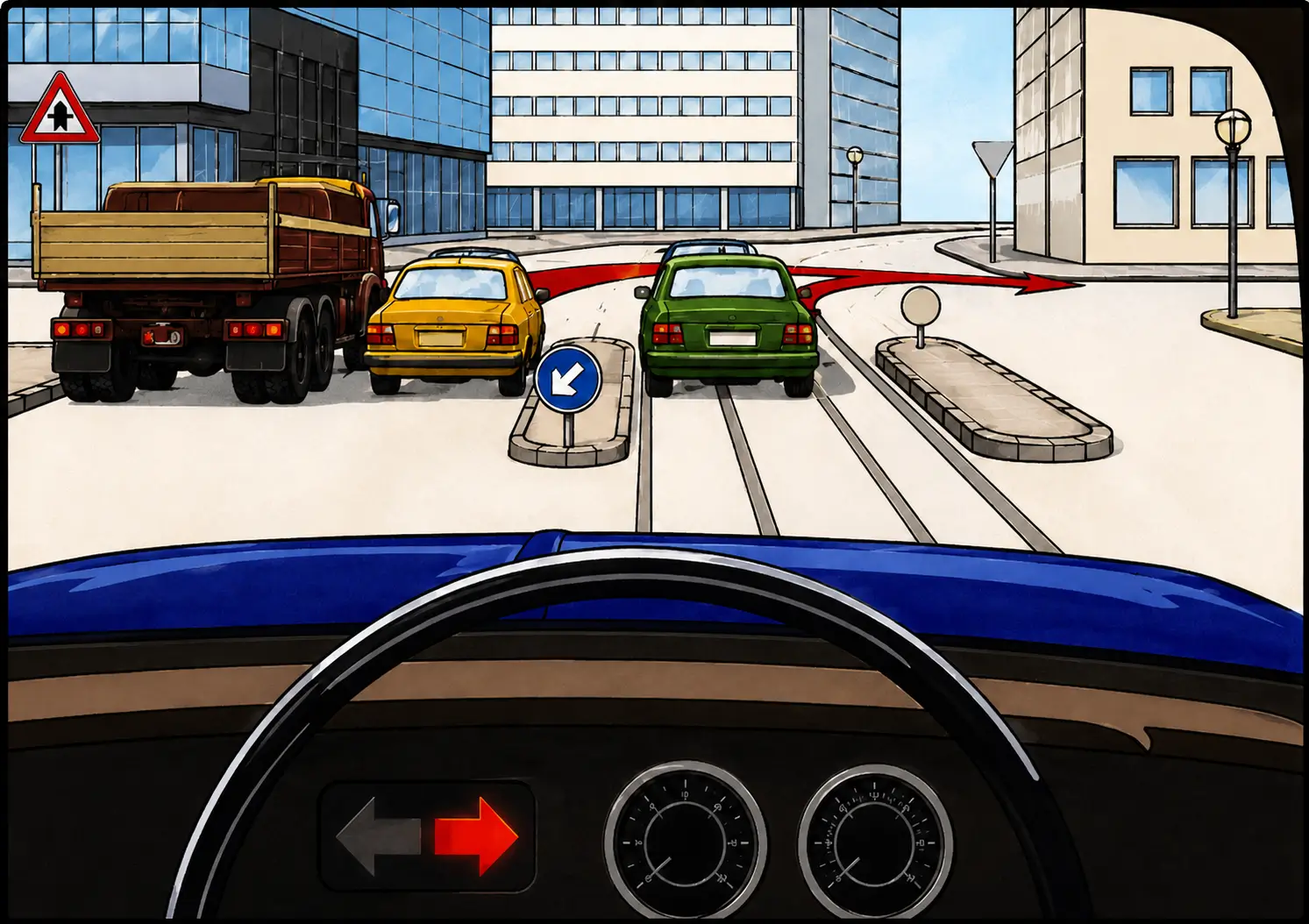
5.You want to turn onto a road from a traffic calmed area. A cyclist is approaching from the right. Who must wait?
- You must wait
6.You want to turn out of a road with a sunken kerbstone into another road. A car is coming from the right. Who must wait?
- Whoever turns into a road over a sunken kerbstone must wait
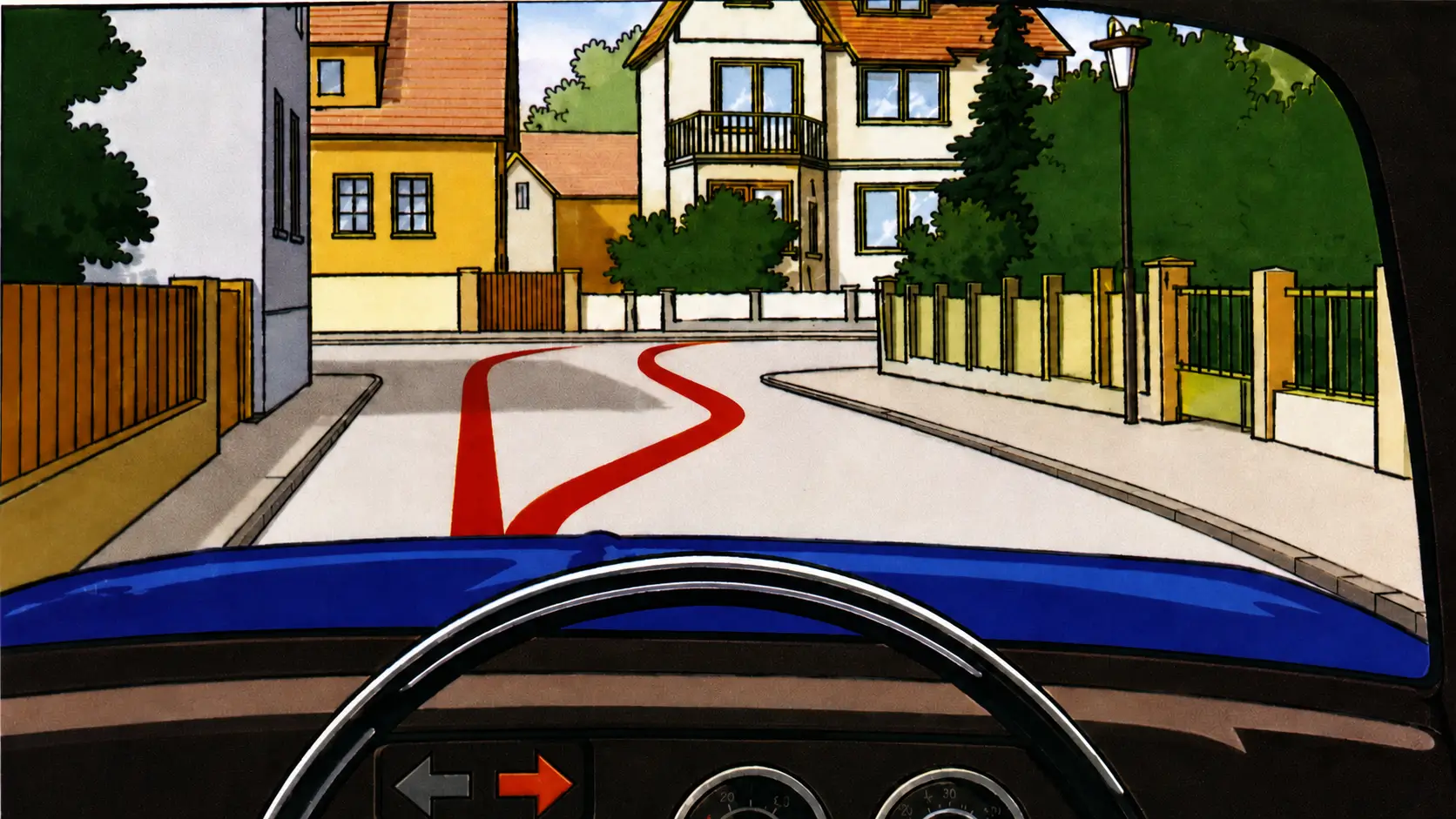
7.What must you do when leaving the edge of the roadway?
- Check for traffic from behind
- Switch on your direction indicator
8.You want to set off from the driveway. Who must wait?
- You must wait
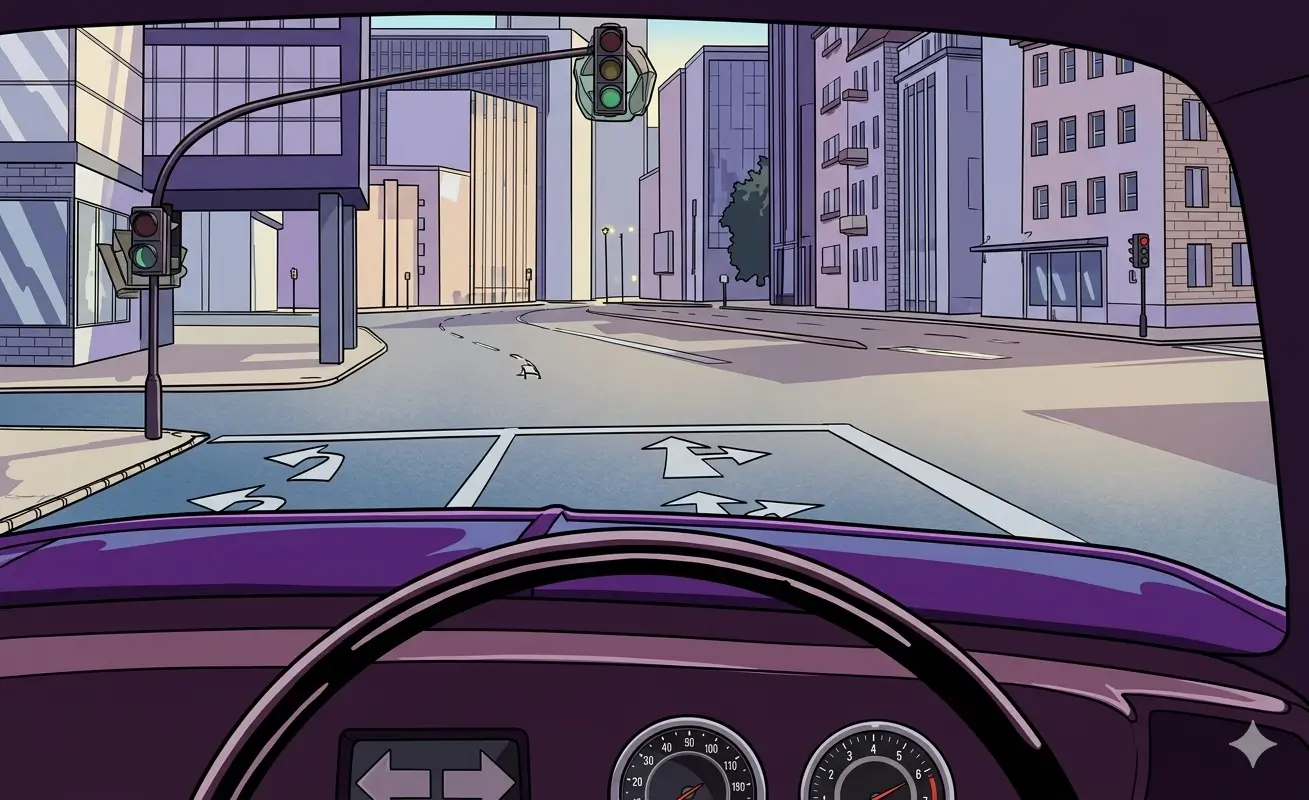
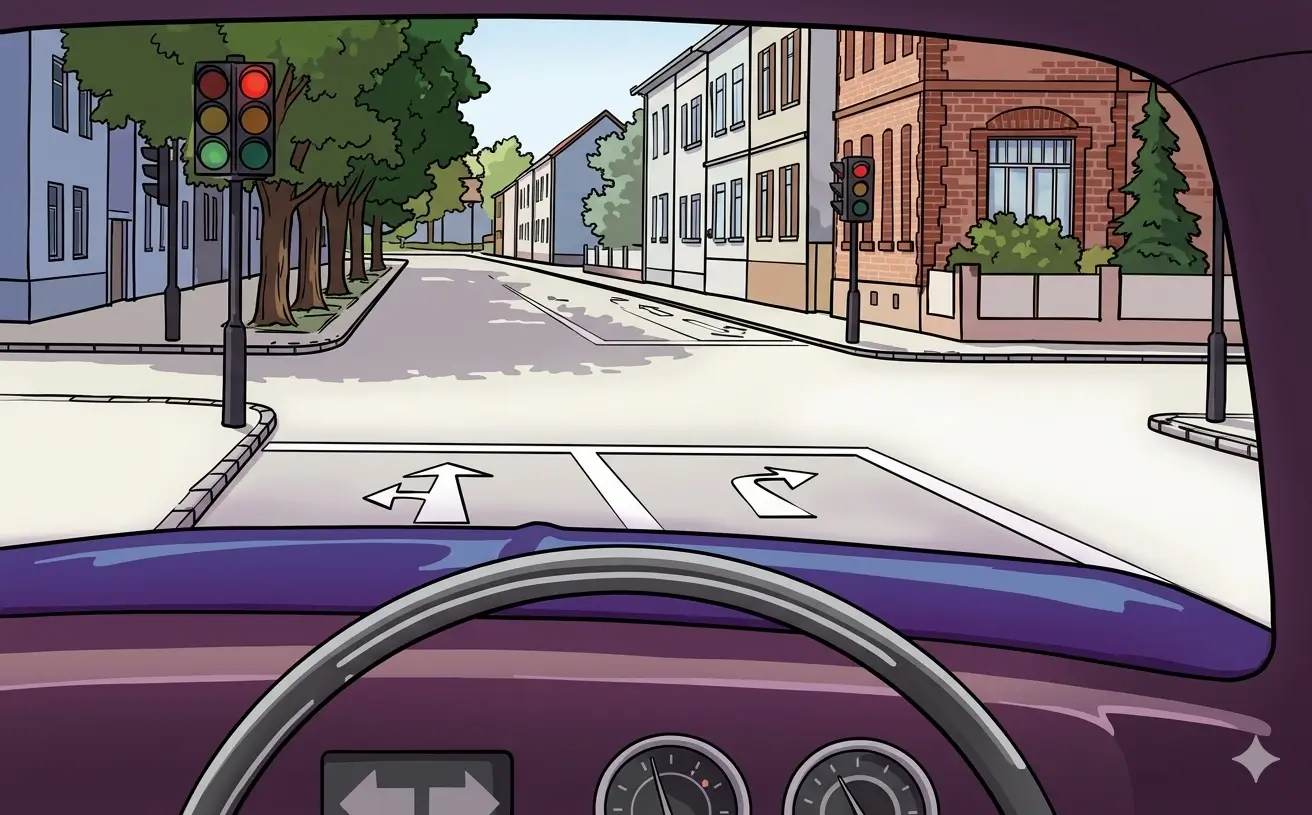
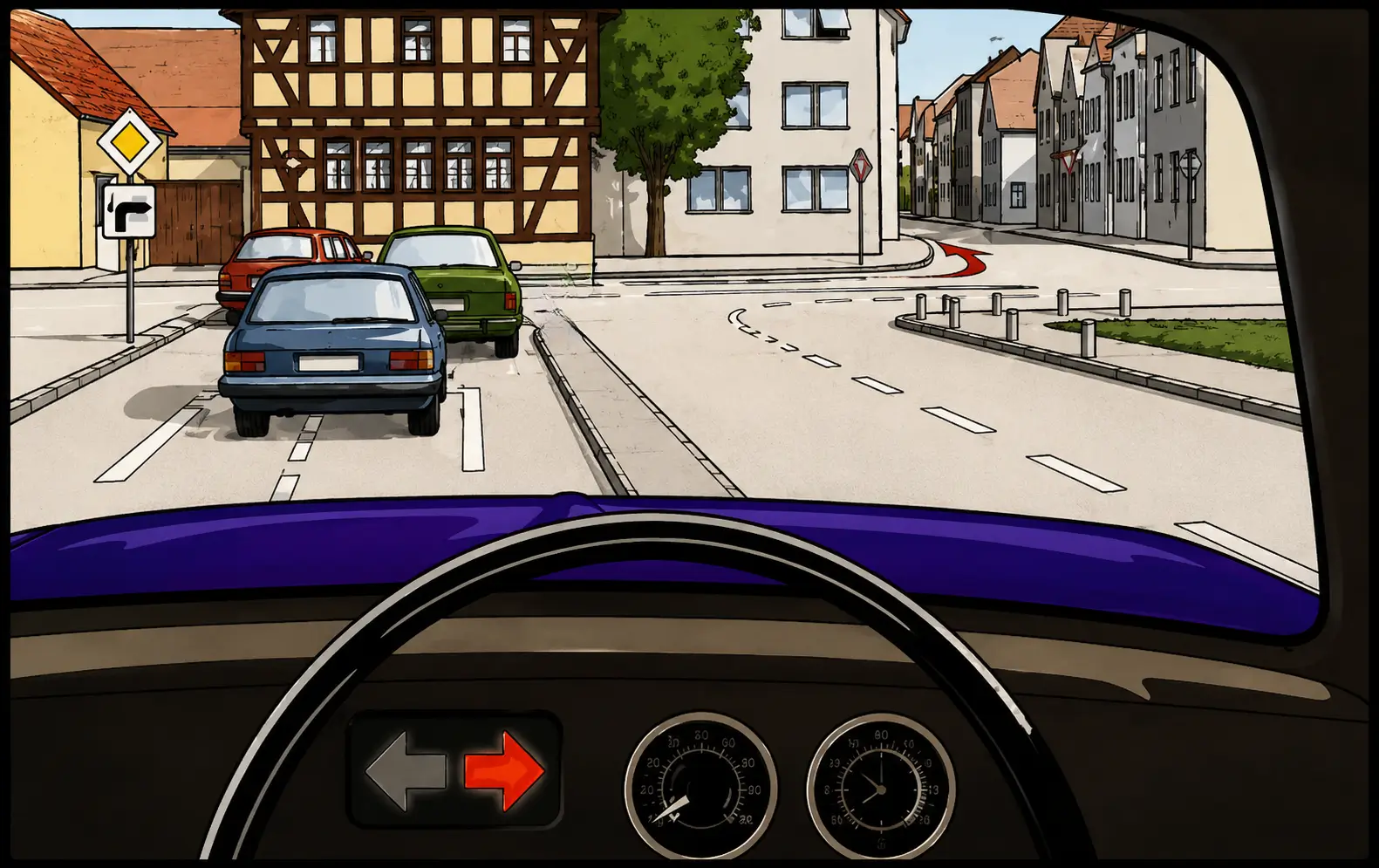
9.By mistake, you have taken the right-hand lane but wish to turn left. What do you do?
- Proceed straight ahead or turn right
10.What must you remember when you want to change lanes?
- You must signal your intention to change lanes in time
- You must pay attention to the traffic following behind
11.Where must the zipper feed-in method be employed?
- Where a lane comes to an end
- Where a lane is entirely blocked by an obstruction
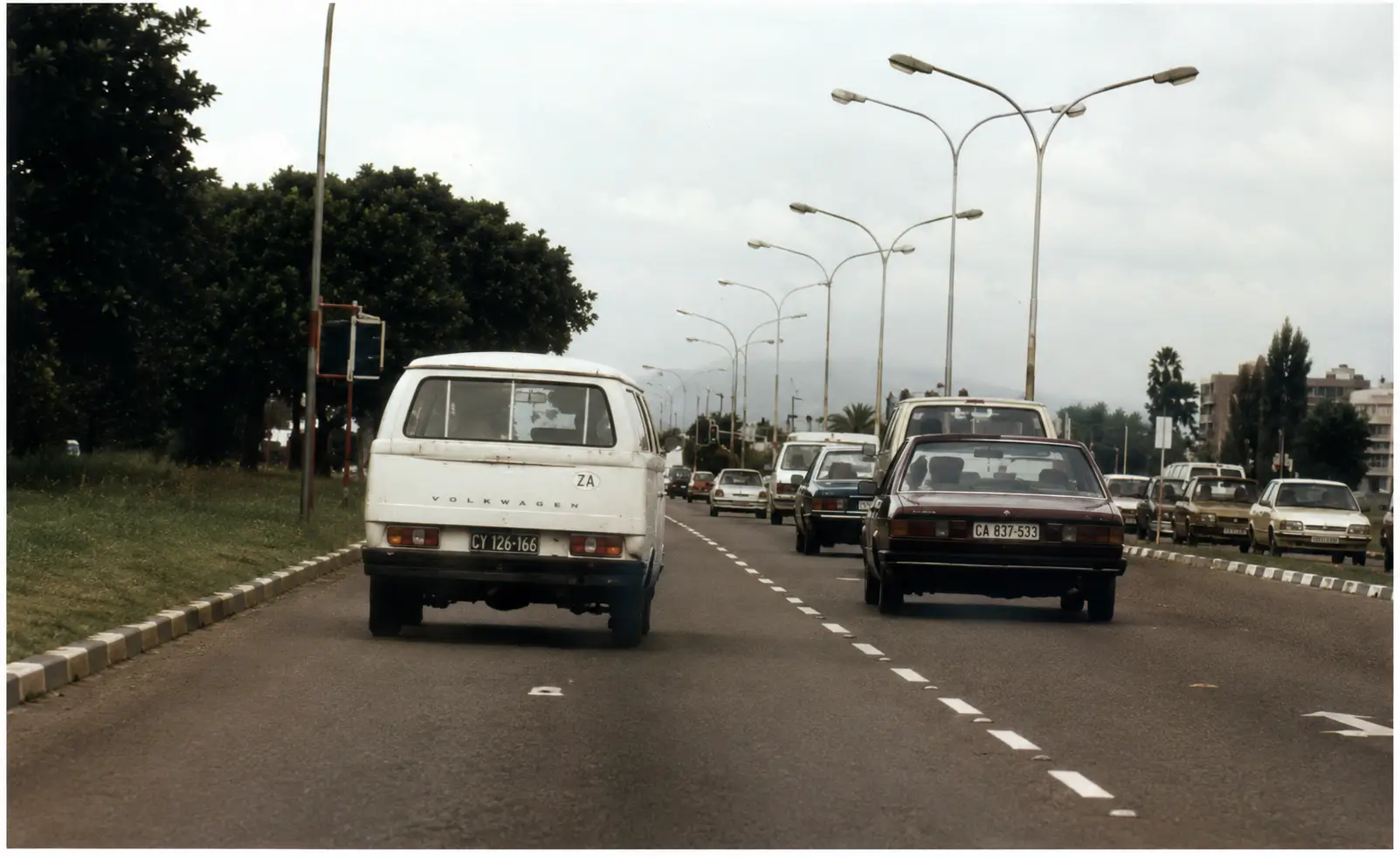
12.On a roadway with several lanes in one direction, one lane comes to an end. What must the drivers in the continuing lane do?
- Allow the vehicles which are unable to proceed to move into the continuing lane using the zipper feed-in method
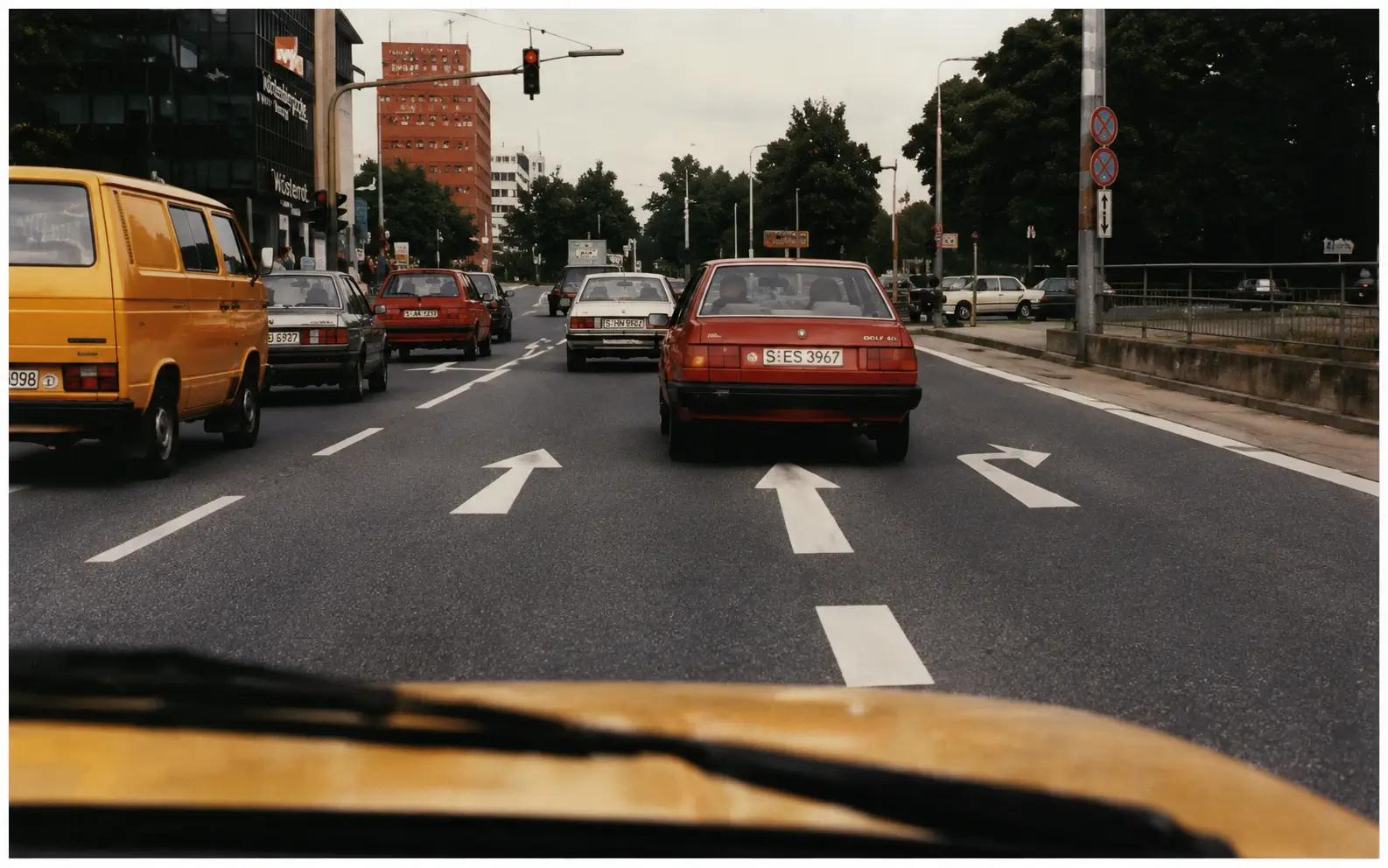
13.You want to proceed straight ahead. What do you do?
- Reduce speed, keep your distance and, if necessary, stop
- If there is a large enough gap in the traffic, change to the right-hand lane
14.You have taken the left lane by mistake although you want to turn right. How are you allowed to proceed?
- Straight ahead
- To the left
15.What do you do if you want to drive straight on?
- Brake so that the driver in front can change lanes
16.A car is reversing into a parking space. The vehicle travelling in front of you is moving into the right-hand lane. What should you do?
- If traffic behind permits, move into the right-hand lane too
- If vehicles behind you are overtaking, stay in the left hand lane, drive slowly and, if necessary stop
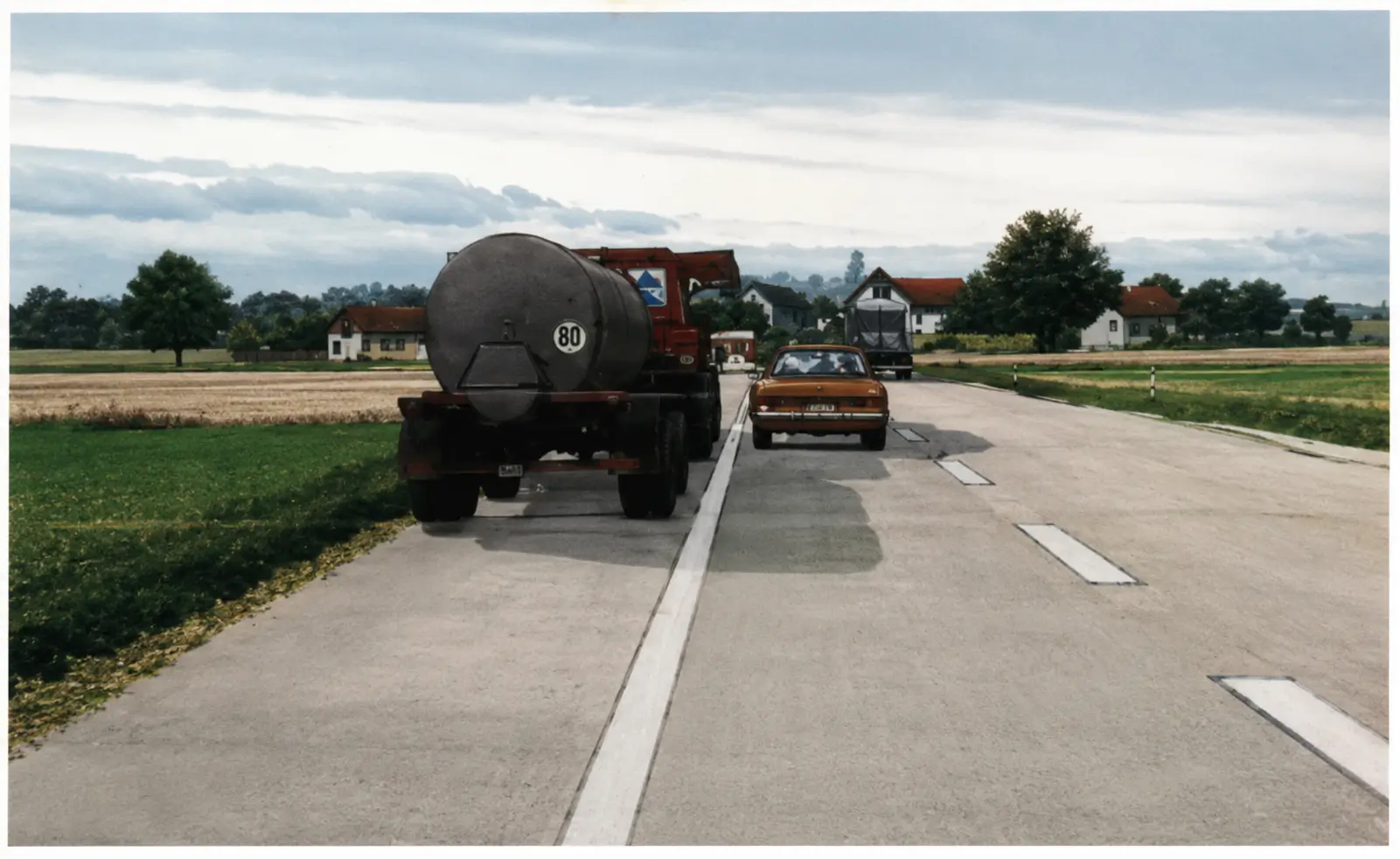
17.You are approaching the vehicles in this picture. What do you do?
- Watch if the truck and trailer remain on the hard shoulder
- Allow the truck and trailer to enter the roadway when it indicates right
18.What must you know about using the rear-view mirrors?
- You cannot see vehicles and pedestrians in a blind angle
- Rear-view mirrors must be adjusted to the driver
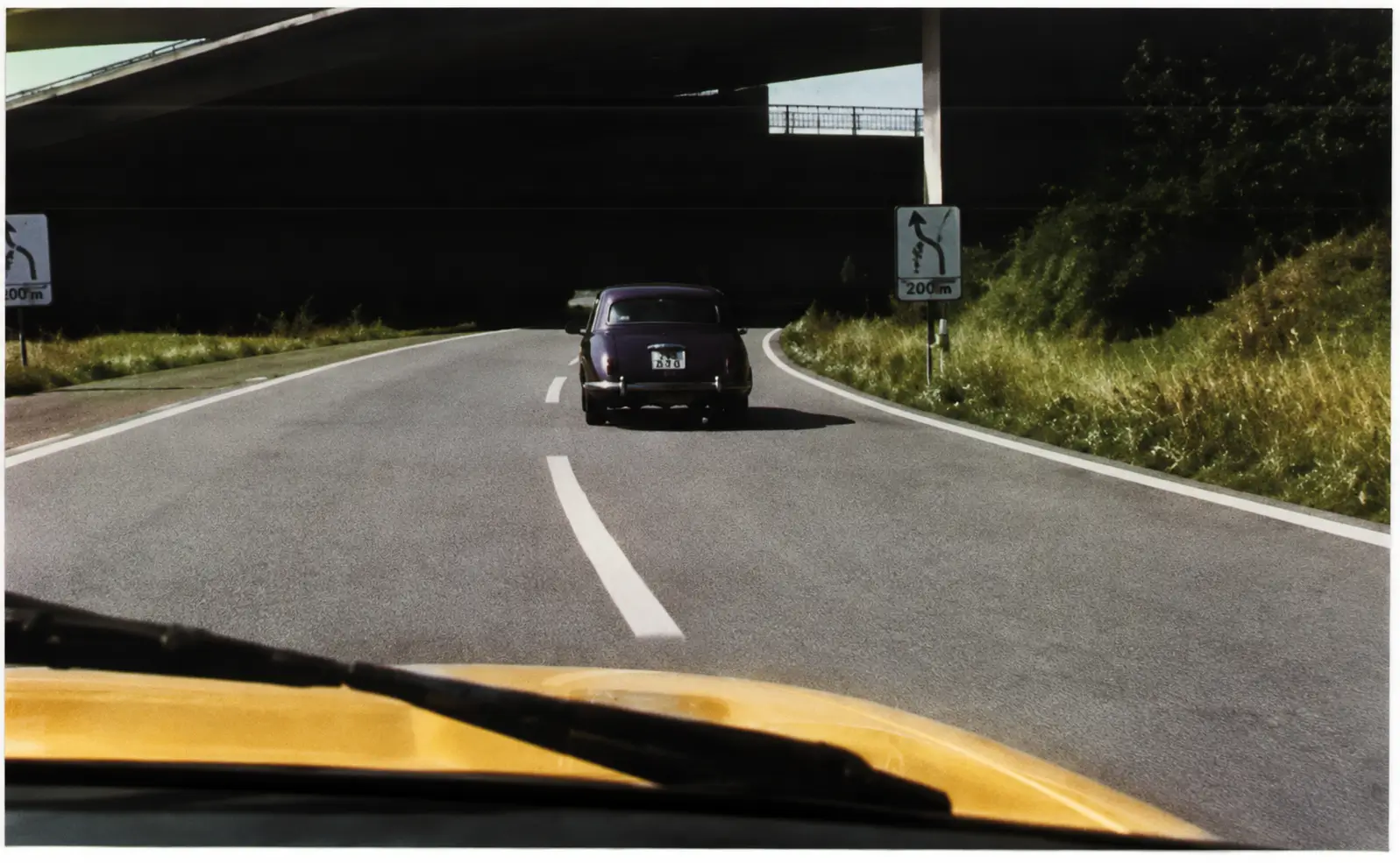
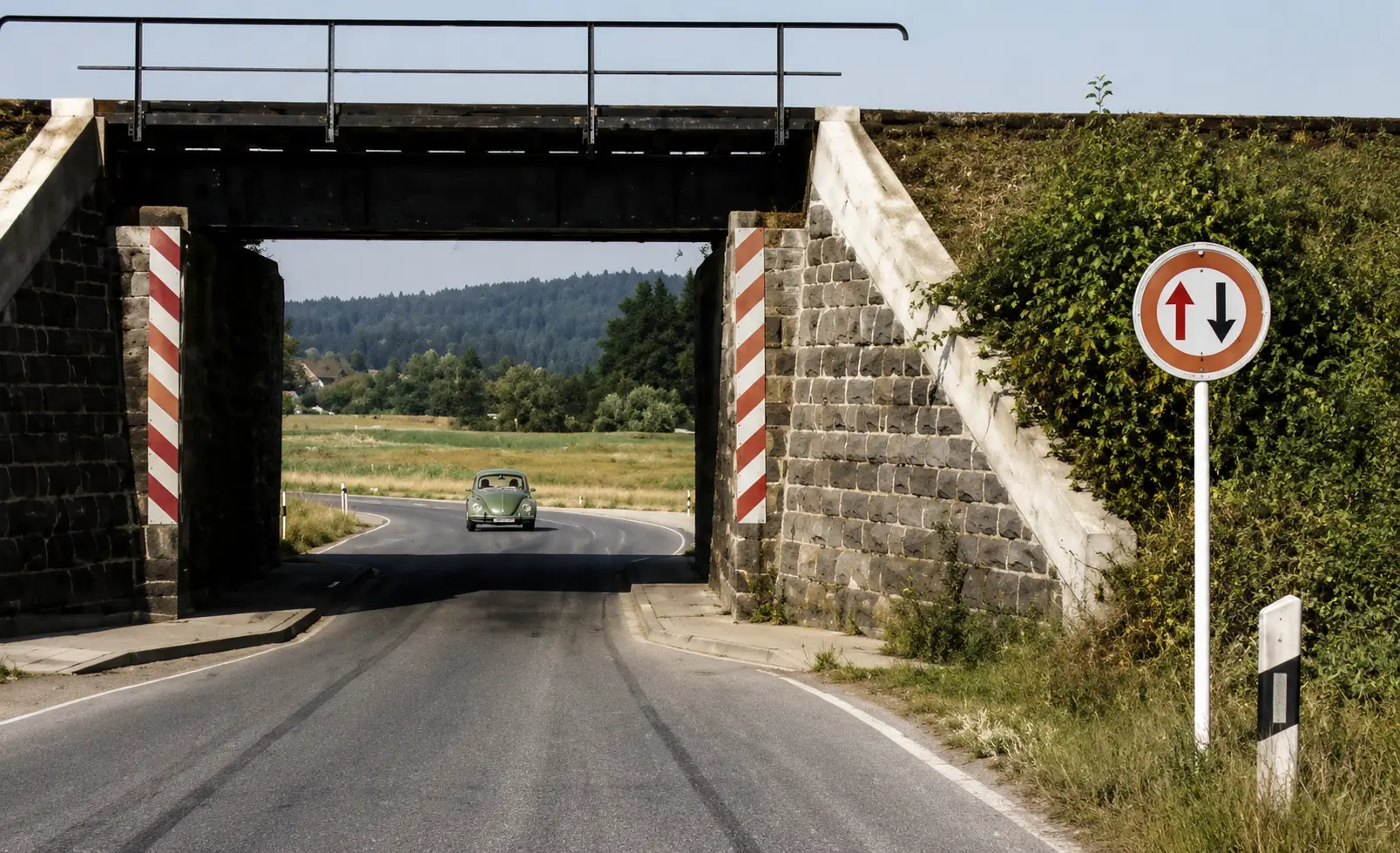
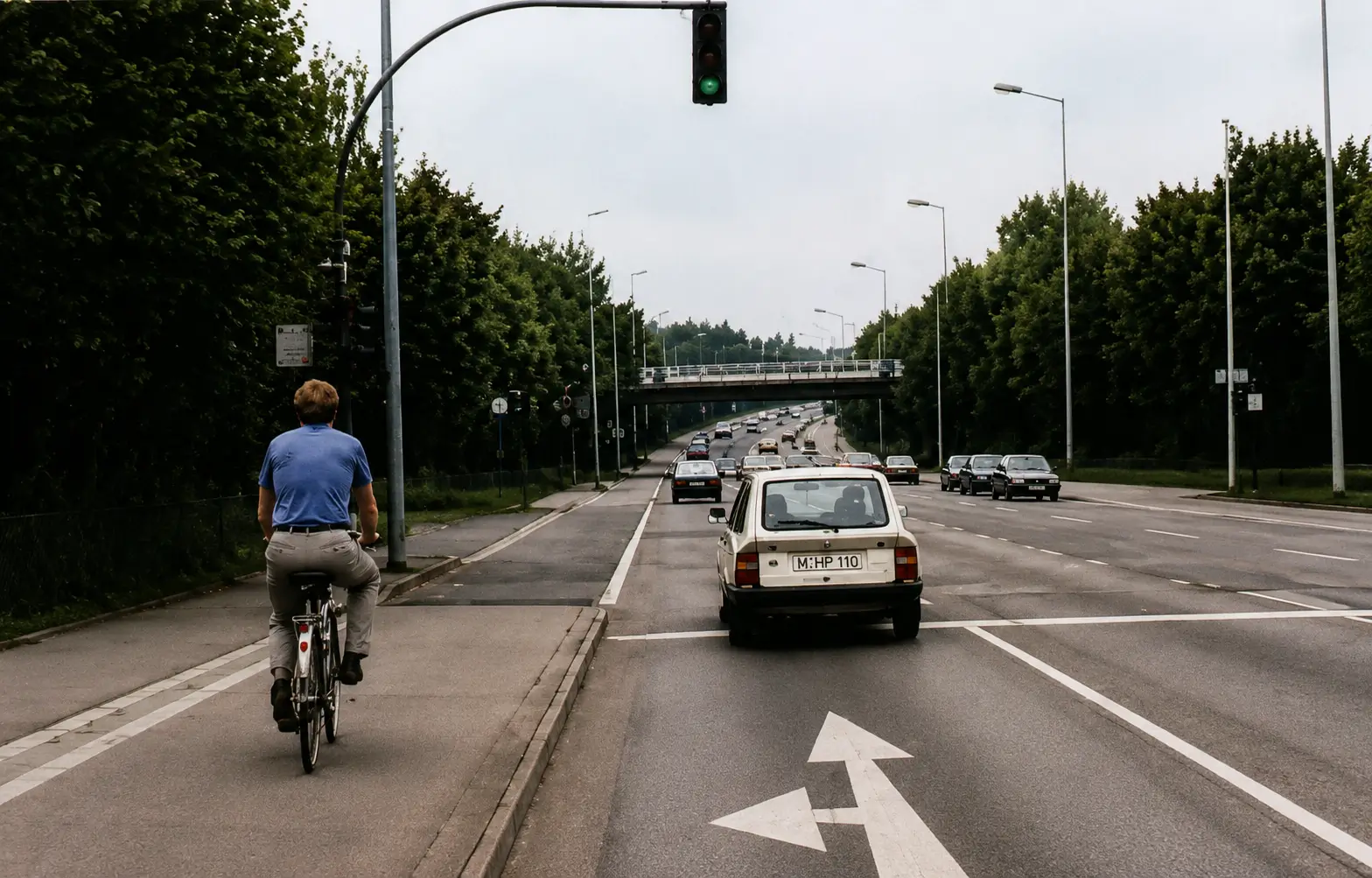
19.What must you reckon with here?
- The vehicle in front changing lanes
- Denser traffic beyond the underpass
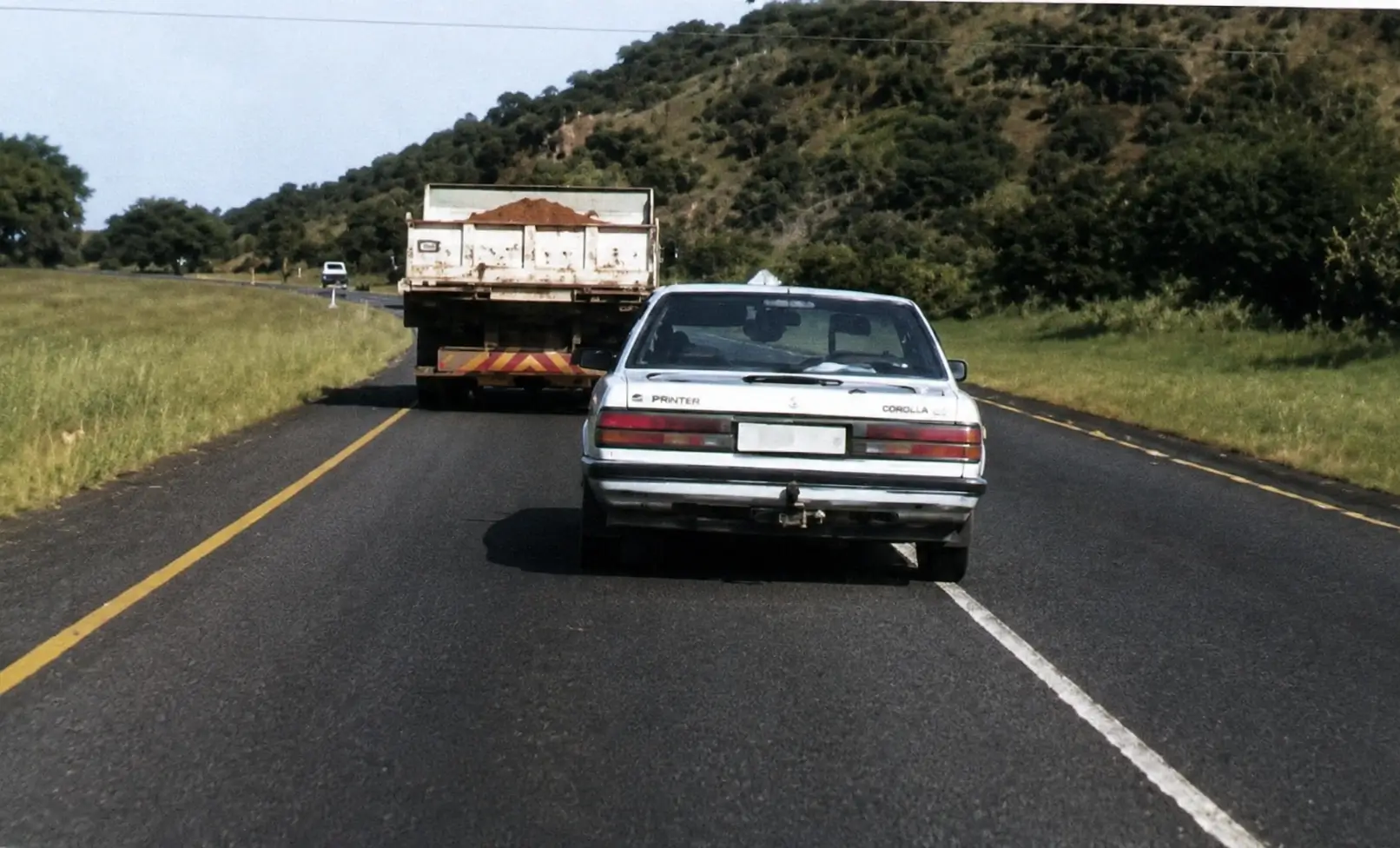
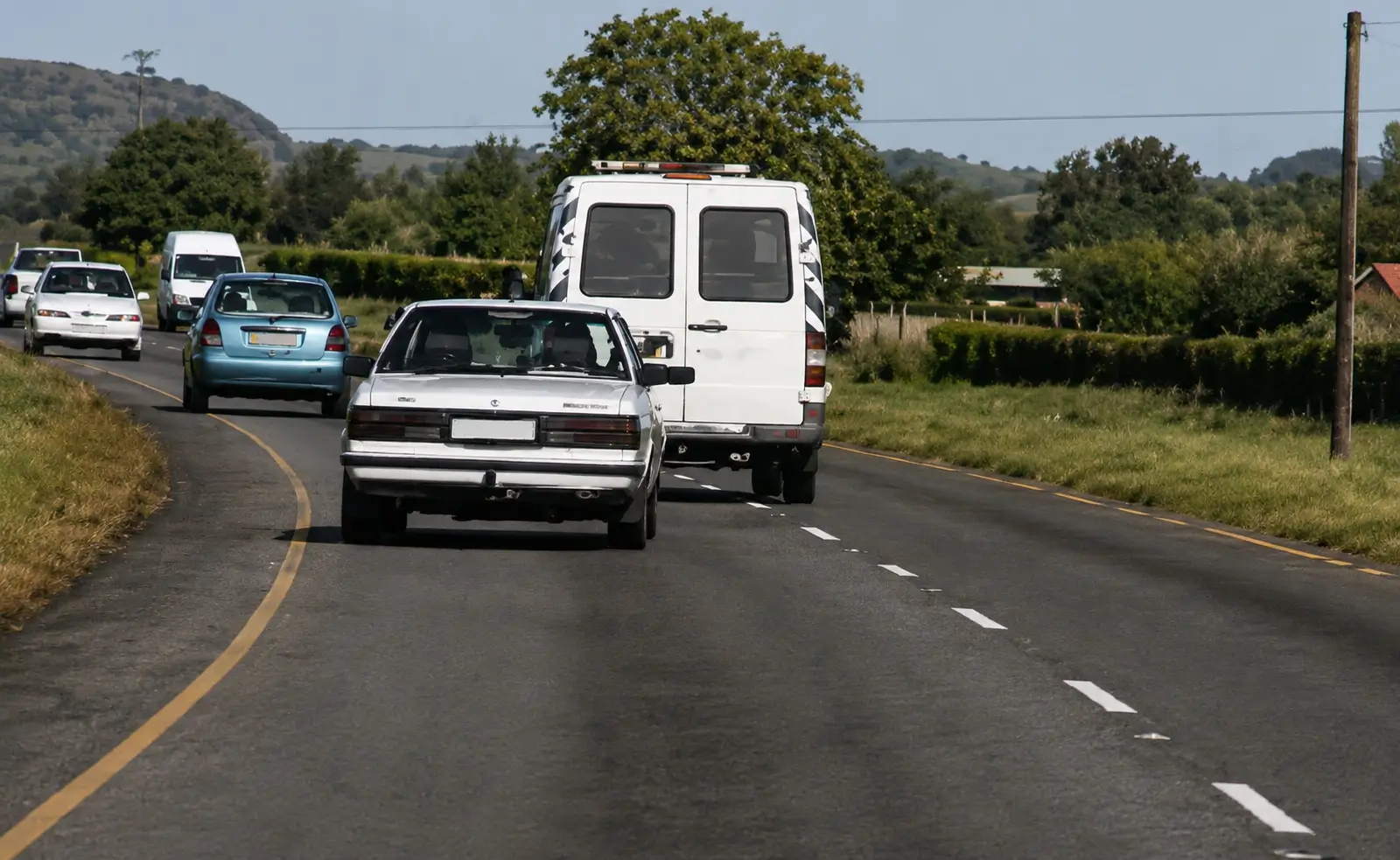
20.You are approaching the truck and trailer which is changing into your lane at about 60 km/h. Which possibilities do you have?
- Keep in lane and let the truck and trailer filter in
- Keeping a careful eye on vehicles travelling behind, switch to the right-hand lane
21.What do you do in this situation?
- Stop, if you cannot pass without danger
22.Which vehicle must wait when half the roadway is closed because of roadworks?
- The vehicle on the side of the roadway where the roadworks are
23.Who must wait?
- I must wait
24.What do you do?
- Reduce speed and, if necessary, stop
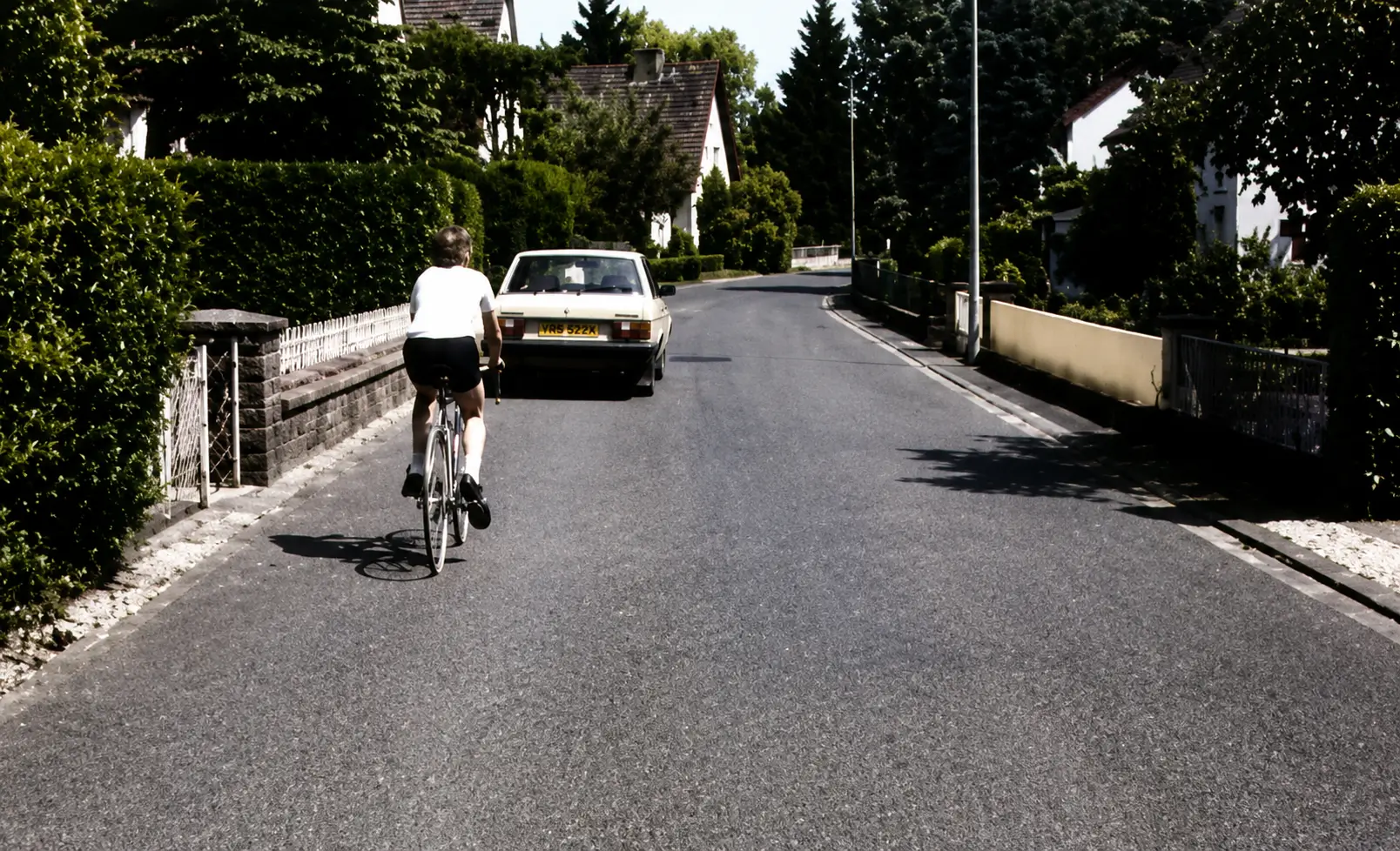
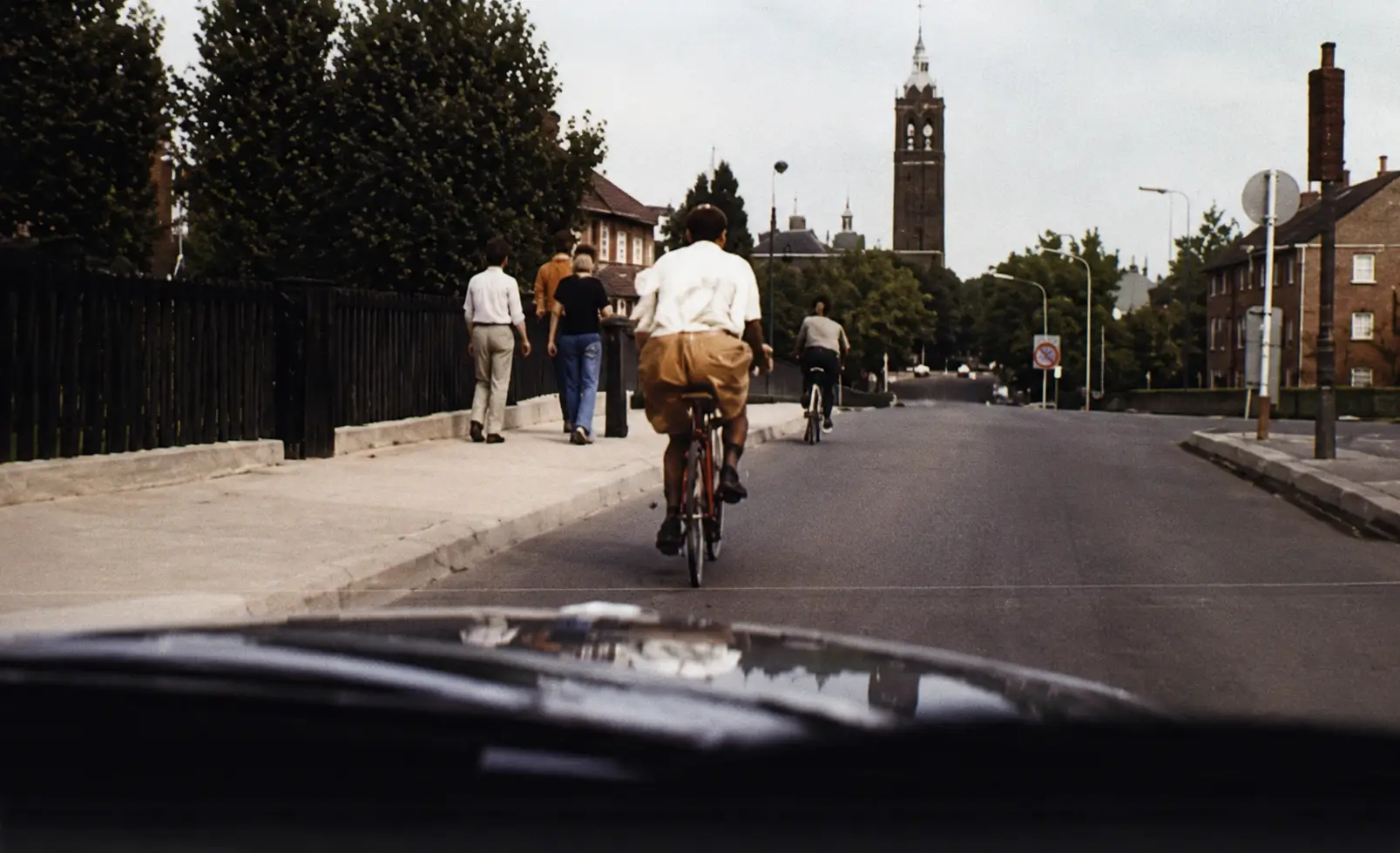
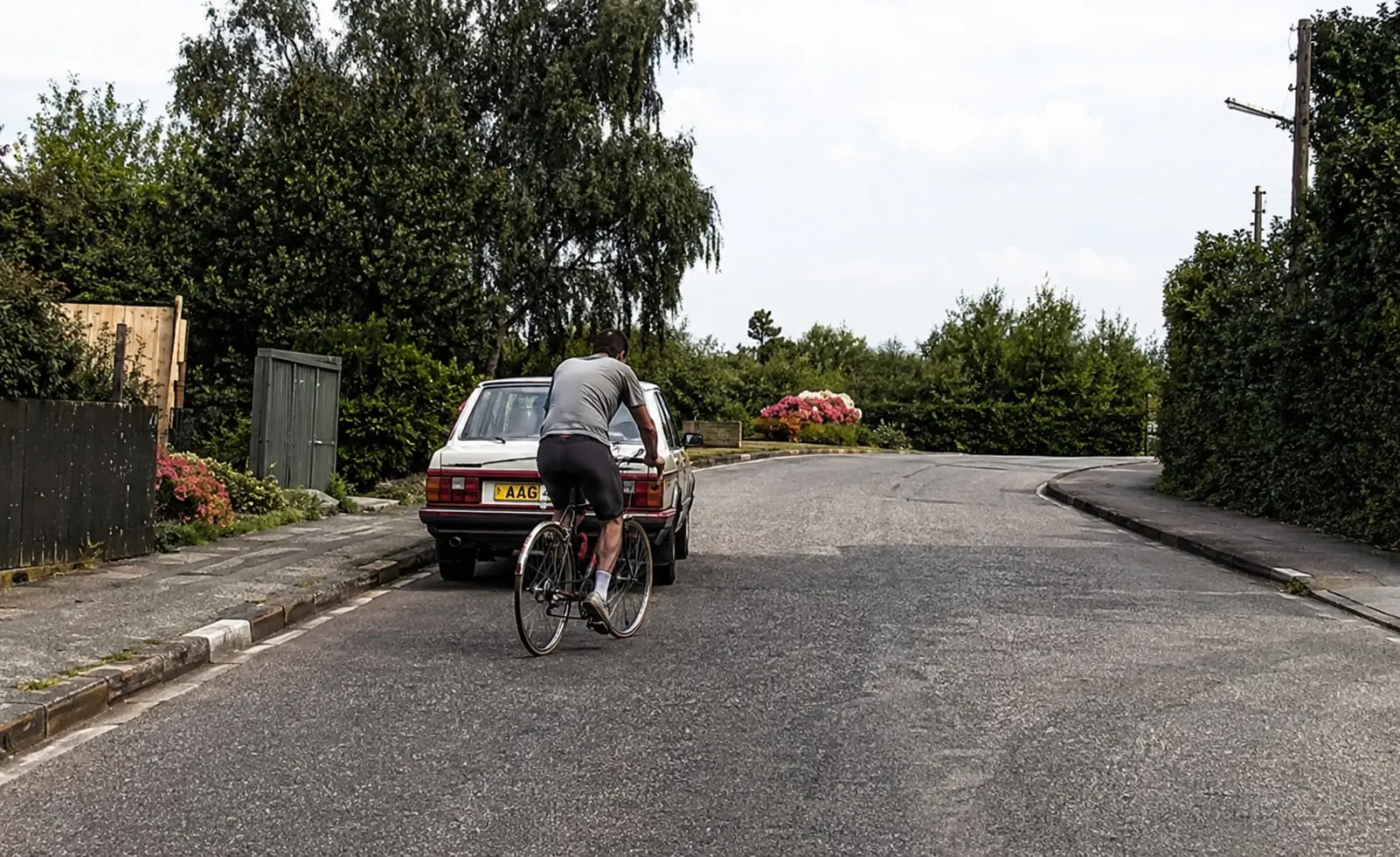
25.There are cyclists and pedestrians on the roadway. What must you remember when overtaking?
- You may only overtake keeping a safe lateral distance (at least 1.5m)
- You may not overtake if oncoming traffic makes it impossible to keep to sufficient lateral distance
26.Is it irresponsible to overtake a truck and trailer before a crossroads?
- Yes, because the truck and trailer can obscure the view of important traffic signs
- Yes, because the truck and trailer can obscure the view of the crossing traffic
27.You want to overtake a cyclist. Is a lateral distance of 50 cm enough for overtaking?
- No, because the cyclist might suddenly swing out
28.When can overtaking be dangerous even on clear straight roads?
- Because the speed of oncoming traffic is often underestimated
29.What mistakes make overtaking dangerous even on clear and straight roads?
- The distance of an oncoming vehicle is overestimated
- You underestimate your overtaking distance
30.When are you in danger when overtaking?
- When the road user being overtaken suddenly accelerates
- When the road user being overtaken swerves out to overtake
31.In which cases must you abandon overtaking?
- When the road user being overtaken suddenly accelerates
- When there is danger from unexpected oncoming traffic
32.When is overtaking forbidden?
- If you are unable to drive considerably faster than the road user being overtaken
- You do not have a clear view of the road ahead
- When the traffic situation is not clear
33.What must you reckon with in this situation?
- The cyclist will pass the parked car on the right
- Oncoming traffic
34.What are you prepared for?
- The cyclist's riding will be extremely unsteady due to the weight on the carrier
- That the cyclist who is farther away will swerve to the right
35.What are you prepared for?
- With the danger of deeper potholes
- With the danger of skidding and the stopping distance increasing
36.What must you do?
- Overtake the cyclist only after you have passed the stationary vehicle
- Drive past the stationary vehicle with care because oncoming traffic can suddenly appear
37.You wish to overtake a farm tractor with a mounted implement extending beyond its back. What must you remember?
- The mounted implement can swing out when the tractor turns off
- The rear lights may be heavily soiled or concealed, making direction signals difficult or impossible to see when they are on
38.What do you do?
- Overtake only after you have passed the Vehicle
39.Following a slow-moving vehicle are several faster vehicles which cannot overtake. What must the driver of the slow-moving vehicle do?
- He must allow the faster vehicles to overtake at a suitable place
40.As a driver of a slow vehicle, how can you allow faster cars to overtake?
- By pulling over onto the hard shoulder
- By pulling over into a parking lane or lay-by
41.Where is overtaking prohibited?
- When the traffic situation is not clear
- Where oncoming traffic could be obstructed
42.In which instances is overtaking always prohibited?
- At pedestrian crossings
- At blind spots
43.What is the requirement for pulling out to overtake?
- Any danger to traffic following is excluded
- Oncoming traffic is not endangered
44.What must you do to end an overtaking manoeuvre?
- Move over to the left as soon as possible without inconveniencing the vehicle you have overtaken
- Signal your intention to draw in clearly and in good time
45.What are the regulations governing speed when overtaking?
- The speed of the overtaking vehicle must be appreciably higher
- The permissible top speed must not be exceeded
- The person being overtaken must not increase his speed
46.What must you do when you are being overtaken?
- If possible, drive on the far left
- Not increase your speed
47.On which side must you overtake a bus which is travelling in the middle of the roadway (not a one-way street?)
- On the left
48.When may a bus be overtaken on the left?
- In one-way streets
49.Which vehicles may be overtaken only by maintaining a specially great lateral distance?
- Bicycles
- Motorcycles
50.When must you signal?
- Before pulling out to overtake or to pass
- Before pulling in again after overtaking
51.What must you remember about distance when overtaking?
- To maintain an adequate lateral distance primarily from pedestrians and cyclists
- Not to inconvenience the vehicle you have overtaken when you pull in to the left again
52.What must you do on this country road?
- Stop overtaking and move back to the left
- Maintain a great distance from the vehicle in front
53.Why could overtaking be dangerous here?
- There is still slush on the overtaking lane
- Slush could be thrown up and impair visibility
54.Why can it be dangerous if you, as the last in a queue, immediately overtake as soon as the oncoming traffic is past?
- Because you must reckon with others in the queue swinging out to overtake
- Because the distance needed to overtake might not be sufficient
- Because if you perhaps need to push back into the queue, this could lead to an accident
55.What must you remember if you want to overtake?
- The van could start to overtake the vehicle travelling on front of it
- Oncoming traffic could appear
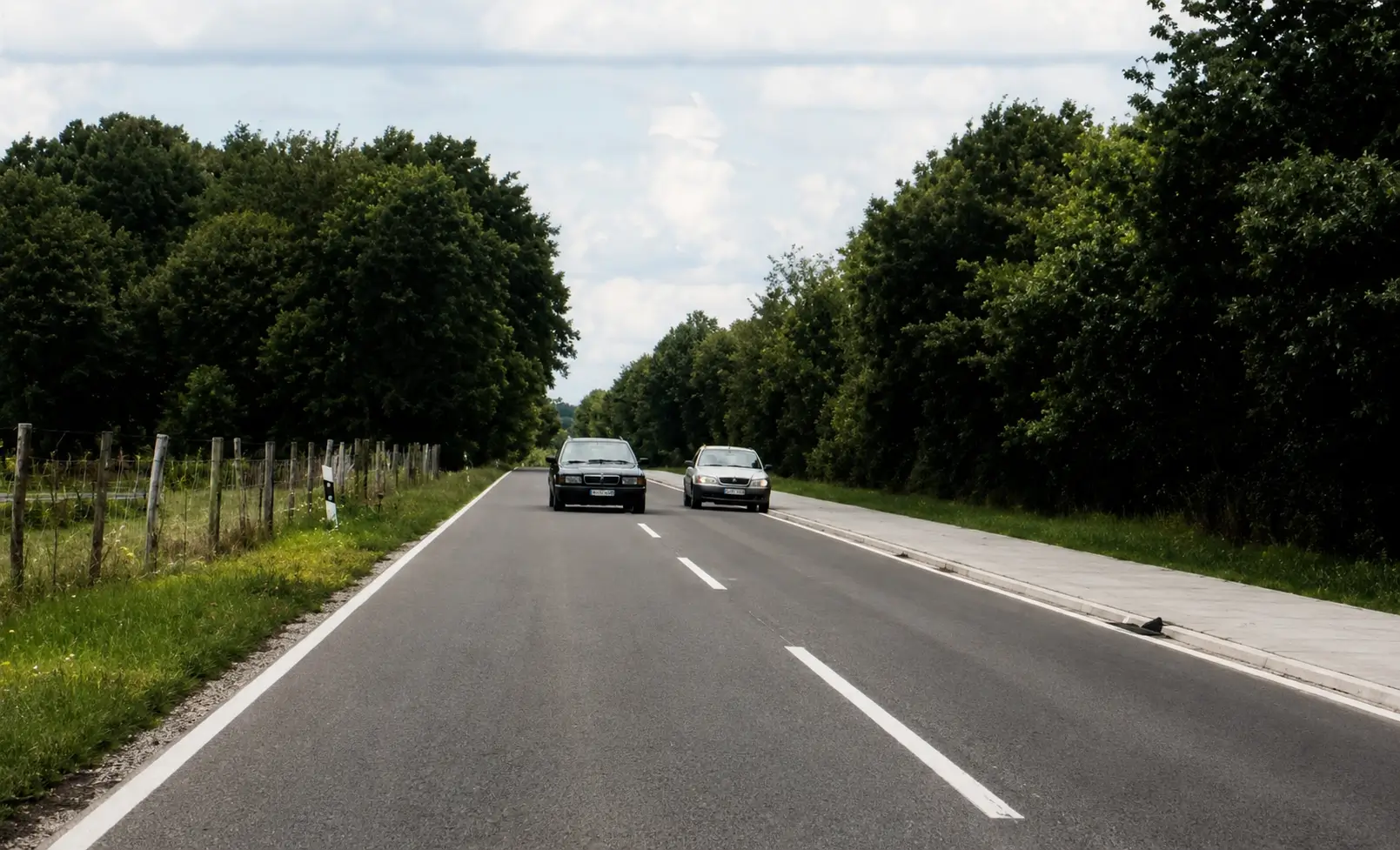
56.Both cars are travelling at about 30 km/h. Are you allowed to overtake both before the bend?
- No, because the distance you need to overtake would be too great
- No, because the white car could swing out to overtake
57.The driver of the overtaking car has evidently made a miscalculation. What must you do?
- Brake immediately and veer to the left
58.A car is overtaking you. Although the oncoming traffic has come dangerously close, the driver does not stop overtaking. What do you do?
- Reduce speed and drive as far as possible over on the left
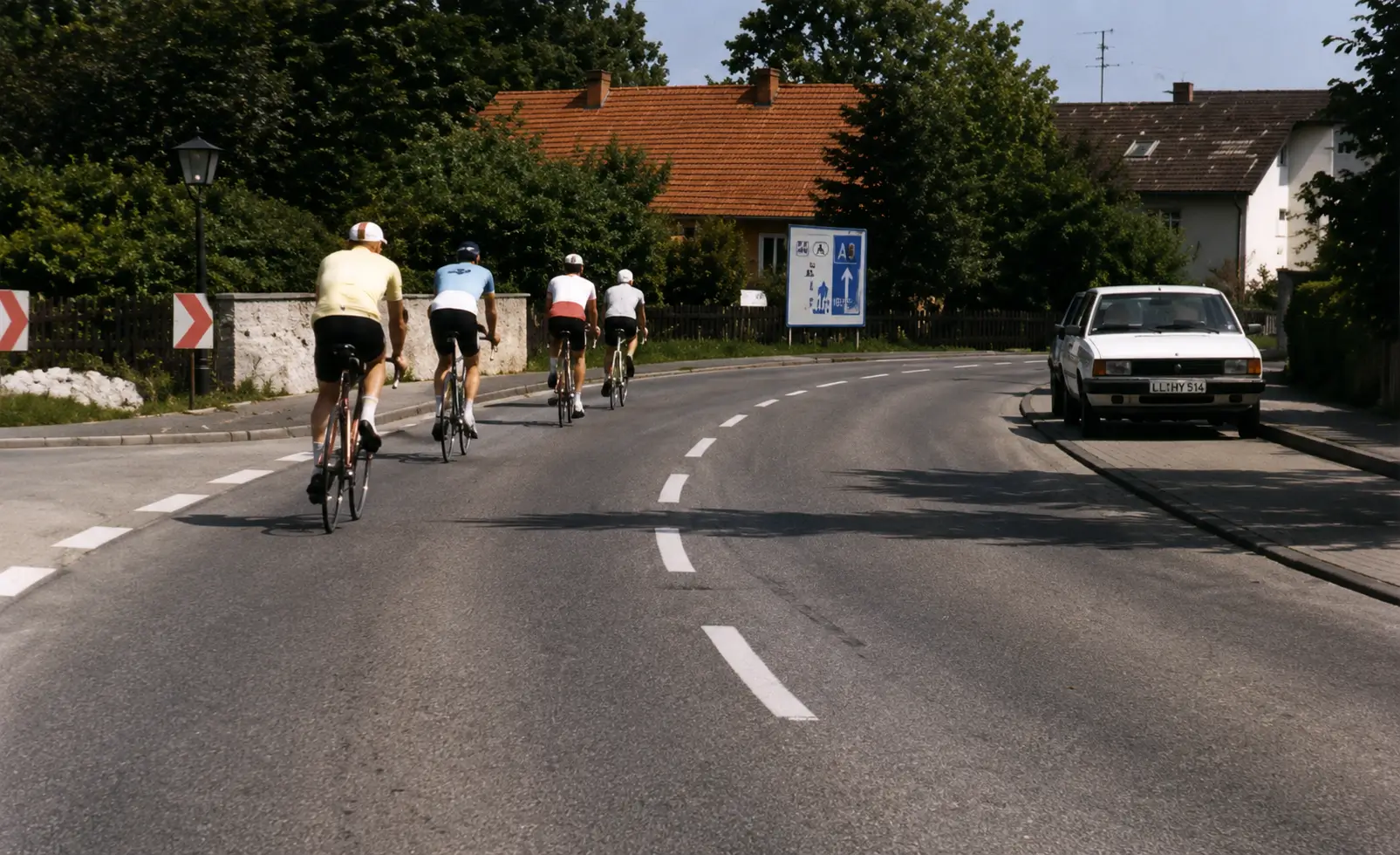
59.Are you allowed to overtake the cyclists?
- No, because your visibility is insufficient
- No, because oncoming traffic could prevent you from passing the cyclists at an adequate lateral distance
60.You want to overtake a cyclist while driving up a slope on a narrow road. What do you do?
- Keep a greater lateral distance because the cyclist may begin to swing out
- Let the oncoming vehicles pass before overtaking
61.A slow driver prevents you from proceeding quickly. What is right?
- You follow him until there is a possibility of overtaking
62.A car in front of you on a country road is slightly slower than permitted. The obstruction by the slower car annoys you. What do you do?
- You control yourself and patiently adapt your speed to the car in front
63.You had to follow a car travelling rather slowly on a country road for some time. This annoyed you and you can finally overtake. What do you do?
- You control your annoyance and overtake
- You keep a sufficient distance, also when changing back into the left-hand lane
64.The queue you are driving in is overtaken in an inconsiderate manner by a car. Because of oncoming traffic the driver wants to join the queue in front of the car driving in front of you. This driver is annoyed and 'closes the gap'. What do you do?
- You give in and let the jostling driver join the queue
65.A truck indicating to the left is driving in front of you. A queue has formed behind you. Some drivers lose their patience. What can you do?
- You only overtake when you are completely certain that the traffic situation allows overtaking without danger
- You open up the distance to the truck to make overtaking easier for the others
66.You are driving on a country road and want to overtake a car. Where at the latest must you have finished overtaking?
- Before an uninterrupted line starts (lane limit)
- Before a no-overtaking sign
67.You are driving 100 km/h on a country road. A truck is driving in front of you at 70 km/h. What is the minimum distance you must be away from the brow of a hill when you start overtaking?
- 800m
68.A queue of cars has formed behind a truck, which car should overtake first?
- The first car behind the truck
69.A big combine harvester in front of you wishes to turn left. What is correct?
- The combine harvester will swing far out to the right when turning
- The combine harvester will slow down drastically before turning
70.You are driving on a road in heavy traffic and have moved into the lane for turning left. At the crossroads, you realize that you wanted to turn right. What do you do?
- Turn left and accept that you have to make a detour
71.You are waiting at a traffic light and want to turn right. What should you remember?
- You must make sure there is no road user beside you on the right intending to go straight on
72.You want to turn left. What do you do?
- Allow the cyclist to continue straight on
73.Which conduct is right?
- I must let the yellow truck pass
74.Which conduct is right?
- I must stop first at the stopping line
- I must let the cyclist pass
75.You want to turn right. In which order do you prepare to turn?
- Check the traffic behind, switch on direction indicator, get into lane
76.Which line must you follow?
- The line on the left
77.When must you switch on your direction indicators?
- Before turning off at a junction or into a driveway
78.You want to turn right. When must you check for traffic behind?
- Before getting into lane and again immediately before turning
79.You want to turn right. Who must you give way to?
- Oncoming cyclist
- Oncoming motor vehicles
- Pedestrians wishing to cross the road you are turning into
80.What must you do?
- Allow both cyclists to proceed
81.Two vehicles are approaching each other. Both want to turn right. What must they do as a rule?
- They turn in front of each other
82.Two vehicles are approaching each other. Both want to turn right. In which cases are you not allowed to turn right in front of each other?
- When you notice that the approaching vehicle wanting to turn right wishes to turn behind your vehicle
- When this is forbidden by lane markings
83.You want to turn right. Which difficulties may arise?
- The visibility of approaching vehicles proceeding straight on may be obstructed by approaching vehicles wishing to turn right
- Dangerous misunderstandings may arise with approaching vehicles wishing to turn right
84.What can give rise to particularly dangerous situations where several lanes turn off?
- Driving too fast
- Changing lanes while turning off
85.Which line must you follow in this one-way street?
- The line on the right
86.All three vehicles want to turn right. Which is in the correct line?
- The yellow car
87.After turning right, you want to turn immediately left. How should you position your vehicle?
- Like the red car
88.Who must signal a change of direction here?
- I myself
- The red car
- The motorcycle
89.Who must signal a change of direction here?
- I myself
- The blue truck
90.Who must signal a change of direction here?
- The motorcycle
91.Who must signal a change of direction?
- I myself
- The oncoming car
92.What do you do when pedestrians are crossing the road you want to turn into and your traffic light is 'green'?
- Show special consideration towards the pedestrians and wait if necessary
93.What do you do when pedestrians are crossing the road you want to turn into?
- Show special consideration towards the pedestrians and wait if necessary
94.What must you do?
- Allow both pedestrians to cross
95.Where are U-turns prohibited?
- On Highways
- On clearways for motor vehicles only
96.What must you do when reversing?
- Mainly look to the back; also check the traffic situation at the front and the side
- Drive with particular attention and slowly
97.You want to turn left and the lights are 'green'. There is a bus wanting to proceed straight ahead. Who must wait?
- You must wait
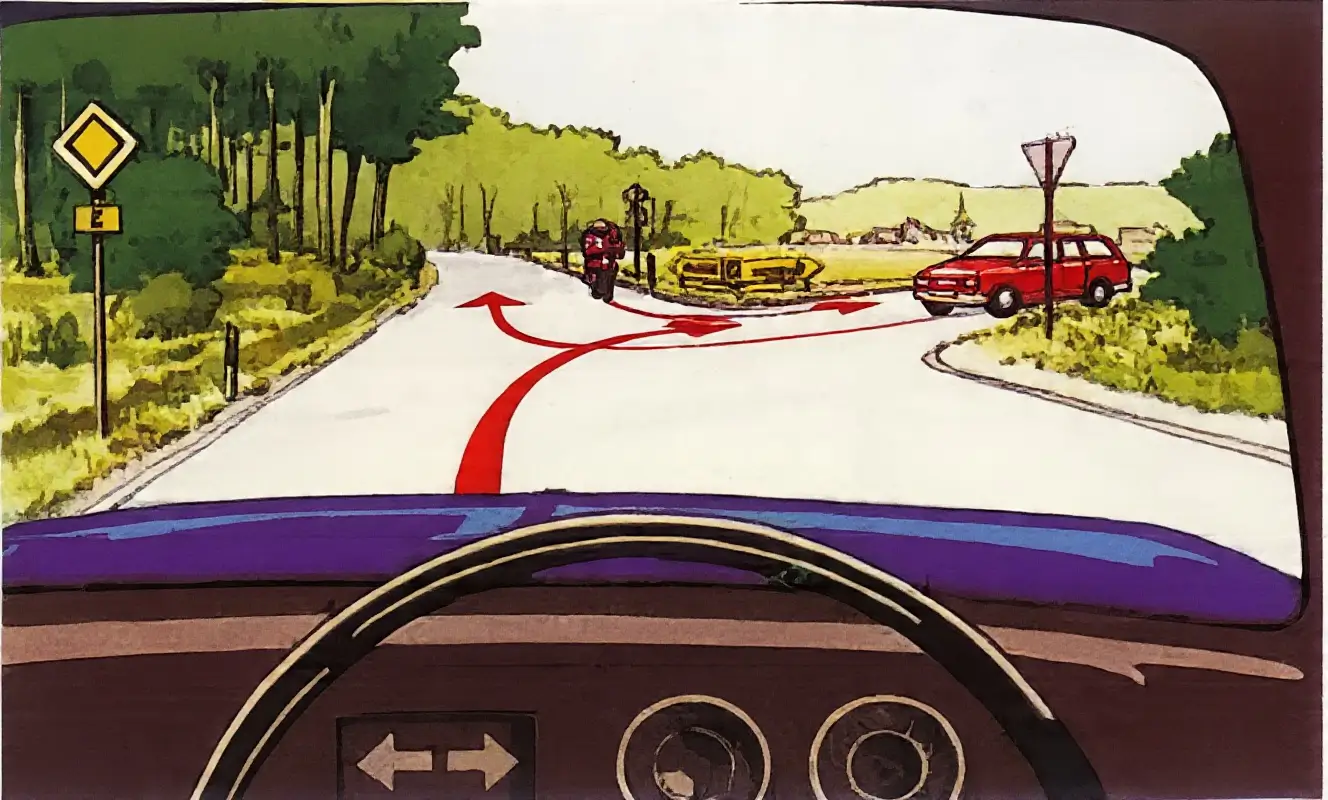
98.You want to turn left into a priority road. To which road users you pay particular attention?
- Vehicles approaching from the left and from the right
- Pedestrians and cyclists on your left or behind you